I have finished the project for Lee's contest. Done with the desert for now. The judging has begun. It ended up being named "The Blood Pharaoh."
I have begun to turn my eye to Halloween. In that vein, I am "editing" (read: rewriting) my cousin-nephew-son's (CNS) module. Once that is done, I am moving on to a Ghost Ship. . .
But, how does this all get me to ghosts? My CNS has a benevolent spirit in his. I don't want to say too much, but a ghost fits best. But, what are ghosts in S&W?
Monstrosities page 190 states: "There are innumerable types of ghosts with varying qualities, often depending on the nature and circumstances under which the person died." The Swords & Wizardry Complete Rulebook tells us to pretty much make up our own.
Ghosts will probably feature prominently in our next couple of modules, and here are some of the ideas that we have had thus far:
A corporeal undead (probably a ghoul) that when killed releases its spirit. Maybe it will be friendly, or maybe it will be another combat.
A ghostly guide is a possibility in the Ghost Ship.
A child's ghost that just wants to play.
A ghost that takes control of people's bodies. Similar to Magic Jar.
An ettin's ghost. One head realizes it's dead, and the other doesn't.
Mord Mar has a ghost that is infused into the stone. It's a deus ex machina device that can infuriate and help PCs through the entire mega-dungeon.
I'm looking for really creepy ideas for ghosts. Got one? Tell me about it. You can leave a comment here or on the Mord Mar Facebook page. . .
Monday, August 28, 2017

Monday, August 14, 2017
Monster Monday: Dessicator Demon
Still working on the Lee Autry contest this week. I found I needed to create a new monster for a plot driven encounter. This was the mini it is inspired by:

Stolen from Lee's Facebook post


Stolen from Lee's Facebook post
This is how it got stated up:
Demon, Desiccator (Ammit)
Hit Dice: 8 (35 hp)
Armor Class: 2 [17]
Attacks: Punch (1d4), bite (1d6)
Save: 8
Special: Immune to fire, lightning; magic resistance 25%, +1 weapon required to hit, all who die bitten by a desiccator demon rise as a zombie 1d4 rounds later.
Move: 12, 6 (flying)
Alignment: Chaos
Challenge Level: 11/1700
Ammit carries a Devouring Rod. Any creature it is pointed at must make a save or their soul is sucked out of their body and destroyed. Bonuses to magical saves apply to this.
How did she get her name? The following is from wikipedia
Ammit (/ˈæmᵻt/; "devourer" or "soul-eater"; also called Ammut or Ahemait) was a female goddess in ancient Egyptian religion with a body that was part lion, hippopotamus and crocodile—the three largest "man-eating" animals known to ancient Egyptians. A funerary deity, her titles included "Devourer of the Dead", "Eater of Hearts", and "Great of Death".[2]
This project has been a lot of fun. I've had to do a lot of research, as I am not that familiar with desert mythology. Ammit is a result of the research. On a side note, the module should be done tomorrow or Wednesday!
Monday, August 7, 2017
Monster Monday: Otyugh
Lee Autry is doing another module contest for his minis. The last time he had this contest, The Oracle Of Stone And Flame was born. This time I will focus on a monster from his new contest, the otyugh.
The otyugh has always been a favorite monster of mine. They are dumb, but can speak, at least in D&D lore. They have a reason to exist. They are garbage eaters! Cities, sewers, and dungeons will all welcome an otyugh.

The Otyugh appears in Swords and Wizardry's Monstrosities (page 367)
Hit Dice: 7
Armor Class: 3 [16]
Attacks: 2 tentacles (1d8), bite (1d4+1)
Save: 9
Special: Disease
Move: 6
Alignment: Neutral
CL/XP: 8/800
I love using an otyugh to be an intelligence hub. They are smart enough to listen, and dumb enough to speak. For little more than last night's stew, adventurers often get valuable information on the location of things in Mord Mar.
In the upcoming adventure, how I will use otyughs is still a secret. I would expect to see that adventure on our publisher page in November. ;)
The otyugh has always been a favorite monster of mine. They are dumb, but can speak, at least in D&D lore. They have a reason to exist. They are garbage eaters! Cities, sewers, and dungeons will all welcome an otyugh.

Jacob E. Blackmon
from Rogue Genius Games
Hit Dice: 7
Armor Class: 3 [16]
Attacks: 2 tentacles (1d8), bite (1d4+1)
Save: 9
Special: Disease
Move: 6
Alignment: Neutral
CL/XP: 8/800
I love using an otyugh to be an intelligence hub. They are smart enough to listen, and dumb enough to speak. For little more than last night's stew, adventurers often get valuable information on the location of things in Mord Mar.
In the upcoming adventure, how I will use otyughs is still a secret. I would expect to see that adventure on our publisher page in November. ;)
Thursday, August 3, 2017
Silver Bulette "sales" update

Monday, July 31, 2017
Monster Monday: Stoneflower
I may get a Monster Monday out on time (nope, it's after midnight now . . .) Today's subject is the Stoneflower, from Monstrosities (page 462).
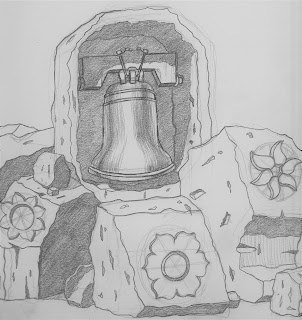

I chose the Stoneflower because I have this cool new artwork (search for Custom Art by Smitty on Facebook). It also happens to feature prominently in the module I just released on RPGNow. When I was finishing up Denizens of the Citadel, I needed a monster that could be trapped for hundreds of years, but still be alive. It also needed to be a good encounter for low level (2-4th) parties. Digging through the Swords and Wizardry monster tomes, I came across the Stoneflower, and fell in love.
It doesn't do a lot of damage (d3). It can spread attacks around (1d6 attacks per round).It has a weird magnetic effect. A perfect monster, right when I needed it. Matt Finch does great work. Sometimes weird monsters are perfect monsters. . .
Wednesday, July 26, 2017
Monster Wednesday (Skullfish)
It's been a busy week around the household. Boating on Sunday, Michigan Adventure on Monday. 3D Printer showed up on Tuesday, so I need to play catch-up. Here's another monster that shows up in the Stonemire region:
SKULLFISH
Hit Dice: 1d4
Armor Class: 3 [16] or 7 [12]
Attacks: Bite (1d6)
Saving Throw: 18
Special: None
Move: 18 (swim)
Alignment: Neutral
CL/XP: A/5
*Skullfish are difficult to hit with any weapon that isn't piercing. The better armor class is when someone is not using a piercing weapon (like a spear or trident)
Skullfish are about the size of a sunfish or crappie. They derive their name from the exposed skull bones. They have no eyes, and no holes for eyes. The skin and muscles attach at the base of the skull giving these fish a distinct, horrifying look. They travel in schools of 10 to 50, and relentlessly attack anything that moves with their tiny dagger-like teeth.
SKULLFISH
Hit Dice: 1d4
Armor Class: 3 [16] or 7 [12]
Attacks: Bite (1d6)
Saving Throw: 18
Special: None
Move: 18 (swim)
Alignment: Neutral
CL/XP: A/5
*Skullfish are difficult to hit with any weapon that isn't piercing. The better armor class is when someone is not using a piercing weapon (like a spear or trident)
Skullfish are about the size of a sunfish or crappie. They derive their name from the exposed skull bones. They have no eyes, and no holes for eyes. The skin and muscles attach at the base of the skull giving these fish a distinct, horrifying look. They travel in schools of 10 to 50, and relentlessly attack anything that moves with their tiny dagger-like teeth.
Tuesday, July 18, 2017
(Not) Monster Monday
I didn't have time to write a blog today. But, I got the central AC fixed! That may help moving forward. . .
Monday, July 10, 2017
Top 12 Undead (catching up on Monster Monday)
I've missed the last couple of monster Mondays. The 4th of July and life happen. I hope to make it up throughout this week and one fashion or another.
Today, I thought I would do a list as I haven't done one for a while. So without any fanfare, here is my top 12 undead creatures:
Today, I thought I would do a list as I haven't done one for a while. So without any fanfare, here is my top 12 undead creatures:
12. At the far end of The Dirty Dozen we have skeletons. These low-level undead are staple in pretty much every mega dungeon in one fashion or another. Whether it is the 111 Skeleton Trap or just a mob of bony undead, skeletons are great. They are so good, that there are dozens of variants: the common skeleton, skeletal knight, even skeletal mages.
11. Ghouls (and their stinky cousins, ghasts) are scary thing for anyone. Well, except maybe elves. They can be mistaken for zombies, they have paralyzation and usually they are accompanied by a stinky ghast.
One of my favorite tricks with a ghoul is to have them at the bottom of a pit trap or someplace where a party member can be easily separated. In this case even one or two of these foul beasts can be very dangerous to a mid-level party.
One of my favorite tricks with a ghoul is to have them at the bottom of a pit trap or someplace where a party member can be easily separated. In this case even one or two of these foul beasts can be very dangerous to a mid-level party.
10. Ghosts are at the upper end of the top 10. They can be a great foil, piece of information, arch enemy, ghosts can be pretty much anything.
I like to use ghosts in a way to juxtapose the situation. The ghost is the only good thing in the haunted castle. The vampire is in love with the ghostly maiden. The fallen king's ghost appears in the middle of his bastard son's court are some ways I have seen them used in the past.
I like to use ghosts in a way to juxtapose the situation. The ghost is the only good thing in the haunted castle. The vampire is in love with the ghostly maiden. The fallen king's ghost appears in the middle of his bastard son's court are some ways I have seen them used in the past.
 9. Eye of Fear and Flame is a baddy that is under-used and under-appreciated. This image is found in the Fiend Folio and is owned by WoTC. In spite of all of its weirdness, I fiend myself drawn again and again to the FF. This guy may not be undead, but he sure looks like it. In my world, they definitely are.
The Eye is a paladin killer. They can speak in alignment tongues and convince people to do evil things. An Eye, when played properly should get the good party to do all kinds of evil things. Convince the paladin to slay the drow child. He will grow up to be a warrior who single-handedly brings down a dwarven hold. Convince the paladin that the thief needs to be killed for his role in a bank heist three years ago. The possibilities are endless with this wolf-in-sheeps-clothing.
8. Vampires are one of the best villains in all of the D&D world. Strahd is the most well known, having spawned an entire line of 2e materials. They are tough to kill. They have legions of rats, bats, and wolves to harry the outdoor adventurers. Vampires are a GM's dream and a player's nightmare. Entire campaigns (and TPKs) can be centered around the actions of a vampire, and hunting him to extinction.
One of my favorite hidden levels of Mord Mar is Lita Fuller's domain. She is an incredibly old vampire who has carved herself a nice living space near the dwarven burial grounds. She uses the death energy of the area to experiment with creating new undead creatures. Lita is always glad for company, and does her best to be a good hostess. It makes her hunting much easier.
7. Shadows are one of the creepiest undead around. They blend in perfectly with their surroundings underground. In S&W they drain strength and spawn new shadows through the stat drain.
Shadow tactics usually include attacking the squishy, weak characters like mages and thieves. Preferably when the party is already fighting something else. They follow, slinking along floors and ceilings waiting for the perfect time to strike.
6. Liches, demi-liches, and draco-liches are some of the most powerful undead. Like vampires, they are usually found at the end of a campaign, or a character killing session. Powerful magic-users who have defeated death are the worst type of magic-user.
Liches are the kings (and queens) of their domain. At NTRPG this year, we entered Mythrus Tower and found a way to destroy 2 of them. But, they had set up their domain so that the party was trapped inside, and that a giant freaking laser cut through the middle of the group. It was a gruesome experience.
5. Mummies drip with exotic flavor. Everyone immediately imagines pyramids and grave robbing when the word is used. Mummy rot is one of the most feared diseases in all of the games we play. Requiring TWO mid-level clerical spells to remove is a dastardly thing indeed.
There are no mummies in Mord Mar, yet. They are a great undead, but require a special care in use. They can't just be thrown into a dungeon like a common zombie. These were human-gods and should be treated as such. A treasure map leading to a mummy's tomb would be a special enough thing for these bandaged baddies to make an appearance.
4. Zombies are the rank and file of the undead. They come in a huge variety: fast, slow, rotting, diseased, infectious, armed, and unarmed to name a few. Every necromancer needs a cadre of zombies. What makes zombies particularly sweet is seeing the very person a group is searching for shambling towards them in full undead glory.
Most recently, zombies were found in Mord Mar in a horde of 20, controlled by a cult of Orcus. Although the adventurers were victorious, they burned through a lot of resources for such common undead.
3. Poltergeists push us into the top three spots. Again, a monster that began its D&D carrier in the FF. In S&W, poltergeists are pretty weak (2 hd, AC 7[12]) but they are a great tension reliever. A goblet flies through the air, and hits Sir Stuffy Shirt in the back, spilling wine all over him.
If I were to use a poltergeist in a dangerous encounter, I would give it synergy with another nearby denizen. For example, a potion maker doesn't want to be disturbed, so he brings several flasks of acid to the room haunted by a poltergeist. The poltergeist then throws the flasks when the party disturbs its prison. . .
2. Wraiths are some great undead. In S&W they are really tough to deal with at range (only taking 1 point of damage from arrows). Add the level drain, and they are fearsome 4 HD critters.
In the swamps around Stonemire, there is said to be a wraith that rides an undead swamp cow (catoblepas). He hunts for the killers of his family. But, the killers are long dead.
1. Finally, we come to the favorite undead (at least this week). My #1 is Corpse Candle. They appear in the Tome of Horrors Complete (published by Frog God Games). Scott Greene is credited as the author. Here's the stat block for S&W:
Corpse Candle
Hit Dice: 6
Attacks: Incorporeal Touch (1d6)
Save: 11
Special: Hypnotic Lights
Move: 6/18 (flying)
Alignment: Chaos
CL/XP: 8/800
It's those hypnotic lights that make these things amazing. I used them in a PF adventure a while back where they almost caused a TPK. The party had to work to save their drowning friends, instead of combat the monsters at hand. It was glorious.
One of my favorite hidden levels of Mord Mar is Lita Fuller's domain. She is an incredibly old vampire who has carved herself a nice living space near the dwarven burial grounds. She uses the death energy of the area to experiment with creating new undead creatures. Lita is always glad for company, and does her best to be a good hostess. It makes her hunting much easier.
7. Shadows are one of the creepiest undead around. They blend in perfectly with their surroundings underground. In S&W they drain strength and spawn new shadows through the stat drain.
Shadow tactics usually include attacking the squishy, weak characters like mages and thieves. Preferably when the party is already fighting something else. They follow, slinking along floors and ceilings waiting for the perfect time to strike.
6. Liches, demi-liches, and draco-liches are some of the most powerful undead. Like vampires, they are usually found at the end of a campaign, or a character killing session. Powerful magic-users who have defeated death are the worst type of magic-user.
Liches are the kings (and queens) of their domain. At NTRPG this year, we entered Mythrus Tower and found a way to destroy 2 of them. But, they had set up their domain so that the party was trapped inside, and that a giant freaking laser cut through the middle of the group. It was a gruesome experience.
5. Mummies drip with exotic flavor. Everyone immediately imagines pyramids and grave robbing when the word is used. Mummy rot is one of the most feared diseases in all of the games we play. Requiring TWO mid-level clerical spells to remove is a dastardly thing indeed.
There are no mummies in Mord Mar, yet. They are a great undead, but require a special care in use. They can't just be thrown into a dungeon like a common zombie. These were human-gods and should be treated as such. A treasure map leading to a mummy's tomb would be a special enough thing for these bandaged baddies to make an appearance.
4. Zombies are the rank and file of the undead. They come in a huge variety: fast, slow, rotting, diseased, infectious, armed, and unarmed to name a few. Every necromancer needs a cadre of zombies. What makes zombies particularly sweet is seeing the very person a group is searching for shambling towards them in full undead glory.
Most recently, zombies were found in Mord Mar in a horde of 20, controlled by a cult of Orcus. Although the adventurers were victorious, they burned through a lot of resources for such common undead.
3. Poltergeists push us into the top three spots. Again, a monster that began its D&D carrier in the FF. In S&W, poltergeists are pretty weak (2 hd, AC 7[12]) but they are a great tension reliever. A goblet flies through the air, and hits Sir Stuffy Shirt in the back, spilling wine all over him.
If I were to use a poltergeist in a dangerous encounter, I would give it synergy with another nearby denizen. For example, a potion maker doesn't want to be disturbed, so he brings several flasks of acid to the room haunted by a poltergeist. The poltergeist then throws the flasks when the party disturbs its prison. . .
2. Wraiths are some great undead. In S&W they are really tough to deal with at range (only taking 1 point of damage from arrows). Add the level drain, and they are fearsome 4 HD critters.
In the swamps around Stonemire, there is said to be a wraith that rides an undead swamp cow (catoblepas). He hunts for the killers of his family. But, the killers are long dead.
1. Finally, we come to the favorite undead (at least this week). My #1 is Corpse Candle. They appear in the Tome of Horrors Complete (published by Frog God Games). Scott Greene is credited as the author. Here's the stat block for S&W:
Corpse Candle
Hit Dice: 6
Attacks: Incorporeal Touch (1d6)
Save: 11
Special: Hypnotic Lights
Move: 6/18 (flying)
Alignment: Chaos
CL/XP: 8/800
It's those hypnotic lights that make these things amazing. I used them in a PF adventure a while back where they almost caused a TPK. The party had to work to save their drowning friends, instead of combat the monsters at hand. It was glorious.
Monday, June 19, 2017
Lizard-men of Mord Mar (Monster Monday)
The lizard-men of the Swamp are a prehistoric hangover. They were the first humanoid race in the world, but not even they realize this fact. The lizard-men use an oral tradition to tell and re-tell their histories, and have never developed a written language. They are not dumb, however. Occasionally, a member of the tribe has been known to learn Common, in both oral and written form.

The lizard-men are a very spiritual people, but they worship what mankind terms "Forbidden Gods." All known lizard-man gods are evil, and most demand blood sacrifices. These differ by the tribe's oral histories. Some sacrifices are simply "shaggy beasts," and other tribal interpretations require blood from "tusked men." Some are not at all specific, only requiring that the sacrifice is breathing. Over time, almost all human and demi-human sacrifice has been removed from lizard-man culture. Men and their ilk are simply too powerful to raid. However, a group of men stumbling into their territory is a great sacrifice.
A small sect of lizard-men worship Nobback as a god made flesh, and will sometimes attempt to lure creatures to the large alligator. The sect is all males, who keep this godling hidden from the matriarchy.
Lizard-men society is matriarchal. The males are known to be hunter-gatherers while the females tend to societal issues. These include: Oral histories, incubation of eggs, rearing young, making ceremonial instruments (headdresses, sacrificial daggers, altars, jewelry of station, etc) and making or upholding laws. Shamans are almost exclusively female.
Lizard-men near Mord Mar are blood enemies with goblins and kobolds. The dwarves of Stonemire trade swamp cow meat for dyes from the lizard-men. Occasionally, lizard-men will trade with caravans traversing through the swamps.
In the Sanctuary of Water is a separate tribe of lizard-men, that dwell exclusively underground. Their secrets will be revealed on another day.
Lizardmen (from Swords & Wizardry)
Hit Dice: 2+1
Armor Class: 5 [14]
Attacks: 2 claws (1d3), 1 bite (1d8)
Save: 16
Special: Underwater
Move: 6/12 (swimming)
Alignment: Usually Chaos
Challenge Level/XP: 2/30
Image found on Pintrest

A small sect of lizard-men worship Nobback as a god made flesh, and will sometimes attempt to lure creatures to the large alligator. The sect is all males, who keep this godling hidden from the matriarchy.
Lizard-men society is matriarchal. The males are known to be hunter-gatherers while the females tend to societal issues. These include: Oral histories, incubation of eggs, rearing young, making ceremonial instruments (headdresses, sacrificial daggers, altars, jewelry of station, etc) and making or upholding laws. Shamans are almost exclusively female.
Lizard-men near Mord Mar are blood enemies with goblins and kobolds. The dwarves of Stonemire trade swamp cow meat for dyes from the lizard-men. Occasionally, lizard-men will trade with caravans traversing through the swamps.
In the Sanctuary of Water is a separate tribe of lizard-men, that dwell exclusively underground. Their secrets will be revealed on another day.
Tuesday, June 13, 2017
Monster Monday: A Little Late
Monster Monday is late. It happens. Why is not important (my brother's boat broke down, and I spent 3 hours trying to help him). On to the RPG goodness.
I want to expound on last week's topic, the word monster. More specifically, I want to put a "monster" into a campaign. As most of you know, I'm working on a mega-dungeon called Mord Mar. Outside of the dungeon is a swamp, with Stonemire as a possible base of operations. In a fantasy world, there should be some famous creatures in the wilderness that people avoid the territories of. It's time my swamp had some of these:
Nobback: a 15 foot long gator, who is known to seek out anything larger than herself in her territory. About a generation ago, the old timers say that Nobback ate a chimera.
Spiketooth: a huge boar, the size of a horse. Said to have a taste for goblin meat. Spiketooth generally stays to the west end of the swamp (near the goblin homes).
Zielony: a great wyrm green dragon who roosts in an abandoned temple at the south end of the swamp. She generally leaves Stonemire alone, but will occasionally harass merchants for things of interest.
Garbanzo: a weeping willow treant. Garbanzo is usually friendly with humanoids it crosses paths with, but sometimes it takes offense to small things.
Scales: a giant viper that traverses the swamp. Believed to actually be several snakes, all over 10 feet long.
Grumbleskin: a hill giant that lives near the mountain. He has made a lot of money by ambushing adventurers and caravans.
Monday, June 5, 2017
Monster Monday: MONSTER!!!
This past weekend, I was fortunate enough to travel to NTRPG Con. I was even more fortunate to have the ability to hang out with the Frog God games crew. Bill Webb was the one who originally inspired this regular feature on this blog, and he reminded me of it this past weekend.
A paraphrase from Bill: "When I use the word monster, that's what I mean. It is something dangerous, and not easy to defeat or destroy. They are a threat that common people cannot handle."
And that's the topic today: "Monster." Here's the first definition from Dictionary.com: "a legendary animal combining features of animal and human form or having the forms of various animals in combination, as a centaur, griffin, or sphinx."
This definition only scratches the surface of what we, as gamers, mean for "monster." For example, a living statue would be a monster, but not meet that definition. We need a better definition than the standard one.
I would also humbly add to the definition of monster. A monster is something that instills a fear within people that face it.
So what is a "monster?" We'll start with Bill's definition and work forward:
The rest of the story: after it was not turned, panic set in. Those of us with high level characters refused to get in the water with it. And we never destroyed it. We found a way to immobilize it, but I'm not saying how in case you ever play in one of Bill's games.
Does this monster meet the requirements? It was definitely dangerous, difficult to destroy, and threatening. It was undead (combining features of people and the dead.) And it instilled a fear into the highest level party members: a 9th level thief, an 8th level cleric, 5th level fighters and thief, and even a 4th level paladin (or at least his player.)
Although I know the name of this monster (thanks to being friends with the DM), it's not important. We defeated (but not destroyed) a MONSTER in Mythrus Tower's wilderness environs!
A paraphrase from Bill: "When I use the word monster, that's what I mean. It is something dangerous, and not easy to defeat or destroy. They are a threat that common people cannot handle."
And that's the topic today: "Monster." Here's the first definition from Dictionary.com: "a legendary animal combining features of animal and human form or having the forms of various animals in combination, as a centaur, griffin, or sphinx."
This definition only scratches the surface of what we, as gamers, mean for "monster." For example, a living statue would be a monster, but not meet that definition. We need a better definition than the standard one.
I would also humbly add to the definition of monster. A monster is something that instills a fear within people that face it.
So what is a "monster?" We'll start with Bill's definition and work forward:
- dangerous, difficult to destroy, threatening to most
- legendary animal (or person), with combinations of features
- instills a fear into people that see or face it.
- individually, no, goblins do not meet this criteria. However, as a society of chaos, they absolutely could threaten a village, be difficult to destroy and have enough weapons to be dangerous.
- subjectively speaking, goblins could meet this criteria, based on description (elfish ears, a smashed, pug-like face)
- adventurers nearly never fear goblins, but they could be crushed by the weight of a tribe and see true fear.
The rest of the story: after it was not turned, panic set in. Those of us with high level characters refused to get in the water with it. And we never destroyed it. We found a way to immobilize it, but I'm not saying how in case you ever play in one of Bill's games.
Does this monster meet the requirements? It was definitely dangerous, difficult to destroy, and threatening. It was undead (combining features of people and the dead.) And it instilled a fear into the highest level party members: a 9th level thief, an 8th level cleric, 5th level fighters and thief, and even a 4th level paladin (or at least his player.)
Although I know the name of this monster (thanks to being friends with the DM), it's not important. We defeated (but not destroyed) a MONSTER in Mythrus Tower's wilderness environs!
Tuesday, May 30, 2017
Monster Monday: Green Dragons
It's another Monday and a holiday to boot. To all of the service members who lost their lives: words cannot express the gratitude that I have for your sacrifice. May your families endure well in your absence, and you drink in Valhala (or Heaven). You are not forgotten. Dad, enjoy the Great Rest.
*EDIT* After working the long weekend, I wasn't able to finish this on Monday, so Monster Tuesday today!
That said, on to the RPG stuff! There has been a challenge thrown for designing a green dragon's lair, so, green dragons are my topic this week. Dragons are an interesting dichotomy in 1e/OSR. They are the flagship monster, but "relatively" weak for their stature.
HPs are not what makes a dragon the flagship monster though. They are iconic, intelligent, and deadly. Dragons being iconic doesn't really need to be explained. If it really does, google St George, Beowulf, Dragon's Lair, Dragonslayer, or even Never Ending Story. They have been in the social consciousness for 100s of years, if not longer.
Intelligence is an attribute that I think most GMs overlook. Green dragons have an intelligence of "average to very" according to the 1e MM. Average intelligence means that they will stay out of harms way if possible, attack weak party members (aka wizards), retreat when being beaten, have escape routes, etc. Dragons should always use intelligent options when available. This makes a huge difference in difficulty.
The fear aura makes an adult dragon an awesome foe for low level (less than 6th level) party (this isn't in S&W as far as I can tell, but the contest specifies a version of D&D.) The breath weapon is what truly makes dragons dangerous. 3 x day a dragon can breathe damage equal to its HPs (save for half). In my dragon's case that's 72. That's a LOT of HP of damage. 2 salvos like that, and most parties are done, even if they make the save! And, in 1e, dragons can breathe round after round. Dragons can also choose to use three melee attacks per round: 2 claws (1d6 each) and a bite (2d10).
Now that the nuts and bolts are out of the way, let's move on to personality. For my adventure, I have been researching how green dragons should be role-played. There's not a lot on the subject for 1e, so I have room to play around. Here's what we know from the Monster Manual:
With that much information, I can finally develop a personality template for the dragon I'm currently calling Bertha:
Bertha will converse with interlopers, as she has an ego that needs to be fed. This can also gain her information on the intruders, treasure hoards, and other potential information.
If she is insulted, Bertha will attack. She is willing to strike a bargain, even with weaker creatures, if they can further her agenda. The weak creatures had better offer something extraordinary to enter into the bargain, though.
Bertha's lair is set up for her to retreat to a high, safe location if her "guests" begin to overwhelm her. She can even leave through a large vent in the ceiling. I intend her to be able to be a recurring threat.
Does this sound like what a green dragon should be to you?
*EDIT* After working the long weekend, I wasn't able to finish this on Monday, so Monster Tuesday today!
That said, on to the RPG stuff! There has been a challenge thrown for designing a green dragon's lair, so, green dragons are my topic this week. Dragons are an interesting dichotomy in 1e/OSR. They are the flagship monster, but "relatively" weak for their stature.
HPs are not what makes a dragon the flagship monster though. They are iconic, intelligent, and deadly. Dragons being iconic doesn't really need to be explained. If it really does, google St George, Beowulf, Dragon's Lair, Dragonslayer, or even Never Ending Story. They have been in the social consciousness for 100s of years, if not longer.
Intelligence is an attribute that I think most GMs overlook. Green dragons have an intelligence of "average to very" according to the 1e MM. Average intelligence means that they will stay out of harms way if possible, attack weak party members (aka wizards), retreat when being beaten, have escape routes, etc. Dragons should always use intelligent options when available. This makes a huge difference in difficulty.
The fear aura makes an adult dragon an awesome foe for low level (less than 6th level) party (this isn't in S&W as far as I can tell, but the contest specifies a version of D&D.) The breath weapon is what truly makes dragons dangerous. 3 x day a dragon can breathe damage equal to its HPs (save for half). In my dragon's case that's 72. That's a LOT of HP of damage. 2 salvos like that, and most parties are done, even if they make the save! And, in 1e, dragons can breathe round after round. Dragons can also choose to use three melee attacks per round: 2 claws (1d6 each) and a bite (2d10).
Now that the nuts and bolts are out of the way, let's move on to personality. For my adventure, I have been researching how green dragons should be role-played. There's not a lot on the subject for 1e, so I have room to play around. Here's what we know from the Monster Manual:
- The innate cowardice of dragonkind is shown by the fact most can be subdued.
- Dragons’ egoistic nature makes them subject to flattery
- Greed and avarice are major motivating factors in all but the loftiest of dragons
- they are subject to manipulation by very clever persons or the prospect of actual treasure and the promise of more forthcoming.
- ALIGNMENT: Lawful evil
- They are very nasty tempered and thoroughly evil.
With that much information, I can finally develop a personality template for the dragon I'm currently calling Bertha:
Bertha will converse with interlopers, as she has an ego that needs to be fed. This can also gain her information on the intruders, treasure hoards, and other potential information.
If she is insulted, Bertha will attack. She is willing to strike a bargain, even with weaker creatures, if they can further her agenda. The weak creatures had better offer something extraordinary to enter into the bargain, though.
Bertha's lair is set up for her to retreat to a high, safe location if her "guests" begin to overwhelm her. She can even leave through a large vent in the ceiling. I intend her to be able to be a recurring threat.
Does this sound like what a green dragon should be to you?
Tuesday, May 23, 2017
Working toward the Kickstarter - Tuesday Talk
I'm moving forward in the Kickstarter planning stages. One of the most important things for a KS to be successful is to have an engaged audience. I have been actively promoting the blog on FB and G+ for a few weeks now to move toward that goal. What I haven't done yet is start asking what people would like to see in a Mord Mar product.
I have a vision and a lot of writing done for the campaign. But, it does no good if that's not what people are looking for. With that in mind, I am beginning a new weekly blog article: Tuesday Talk!
In this week's Tuesday Talk, I'm asking about the setting. It's important. I mean, it really is everything in a campaign like Mord Mar. For those of you who don't know, I will give a short exposition.
Mord Mar is a great mountain, in which dwarves lived for centuries. The dwarves built a huge city, also called Mord Mar within. They prospered under the Greybeard clan's rule for hundreds of years. Like any successful city-state, they warred with their enemies, namely drow, goblins, and orcs, but the city was always triumphant. Part of this military dominance came from the great teleportation system that connected all of the parts of the city.
Then, the armies of chaos banned together to destroy their structured enemy. Orcs and goblins attacked remote parts of the dwarven homeland, while drow and other magic wielders infiltrated within. The very tools that kept Mord Mar powerful were its downfall. The infiltrators taught the orcs, goblins, and other races that joined in for spoils of war to use the teleportation system. Soon, enemies were appearing out of thin air, and striking down dwarves where they stood. The only area of the city that stayed safe was Var Nae, or Grand Entrance. That section of the city didn't have teleporters to use against the dwarves, and they were able to hold a small piece of their once grand city.
It is rumored that below the base of the mountain, in a deep subterranean cavern, is a device, spell or artifact that can turn a mortal into a god. Many scholars believe this was the very reason why Mord Mar was attacked. Goblins, orcs and their like must dream of immortality. When your society is kill or be killed, there is nothing more tempting.
After the fall of Mord Mar, Var Nae was overrun with refugees from the chaos deeper in the mountain. Many of these dwarves left the comfort of the stone and embarked outside. They found a suitable place near the great mountain, and began to build a city in the swamp. These people benefited from the ancient dwarven discipline of "stonecalling." Some dwarves could move the stone with their voice. A few of these came with the refugees from Var Nae, and build a solid foundation of stone for their new city, Stonemire.
The people of Var Nae understood that they could not reclaim their lost city from the chaos. So, they began an adventurer's guild. Many people from many races came to try their hand at pulling treasure out of the mountain. Many died, a few were successful, and a couple even became rich. It is rumored that at least two members of the guild found how to become gods.
Recently Var Nae has come under drow occupation. They locked the great doors to the outside world.
This is where the 1st Kickstarter book will begin. "Stonemire" will be a setting book, with the city, swamp, and a few nearby dungeons that can once again unlock the Great Doors of Var Nae. Is my premise sound? Would you enjoy reading or playing this product? Please let me know!
I have a vision and a lot of writing done for the campaign. But, it does no good if that's not what people are looking for. With that in mind, I am beginning a new weekly blog article: Tuesday Talk!
In this week's Tuesday Talk, I'm asking about the setting. It's important. I mean, it really is everything in a campaign like Mord Mar. For those of you who don't know, I will give a short exposition.
Mord Mar is a great mountain, in which dwarves lived for centuries. The dwarves built a huge city, also called Mord Mar within. They prospered under the Greybeard clan's rule for hundreds of years. Like any successful city-state, they warred with their enemies, namely drow, goblins, and orcs, but the city was always triumphant. Part of this military dominance came from the great teleportation system that connected all of the parts of the city.
Then, the armies of chaos banned together to destroy their structured enemy. Orcs and goblins attacked remote parts of the dwarven homeland, while drow and other magic wielders infiltrated within. The very tools that kept Mord Mar powerful were its downfall. The infiltrators taught the orcs, goblins, and other races that joined in for spoils of war to use the teleportation system. Soon, enemies were appearing out of thin air, and striking down dwarves where they stood. The only area of the city that stayed safe was Var Nae, or Grand Entrance. That section of the city didn't have teleporters to use against the dwarves, and they were able to hold a small piece of their once grand city.
It is rumored that below the base of the mountain, in a deep subterranean cavern, is a device, spell or artifact that can turn a mortal into a god. Many scholars believe this was the very reason why Mord Mar was attacked. Goblins, orcs and their like must dream of immortality. When your society is kill or be killed, there is nothing more tempting.
After the fall of Mord Mar, Var Nae was overrun with refugees from the chaos deeper in the mountain. Many of these dwarves left the comfort of the stone and embarked outside. They found a suitable place near the great mountain, and began to build a city in the swamp. These people benefited from the ancient dwarven discipline of "stonecalling." Some dwarves could move the stone with their voice. A few of these came with the refugees from Var Nae, and build a solid foundation of stone for their new city, Stonemire.
The people of Var Nae understood that they could not reclaim their lost city from the chaos. So, they began an adventurer's guild. Many people from many races came to try their hand at pulling treasure out of the mountain. Many died, a few were successful, and a couple even became rich. It is rumored that at least two members of the guild found how to become gods.
Recently Var Nae has come under drow occupation. They locked the great doors to the outside world.
This is where the 1st Kickstarter book will begin. "Stonemire" will be a setting book, with the city, swamp, and a few nearby dungeons that can once again unlock the Great Doors of Var Nae. Is my premise sound? Would you enjoy reading or playing this product? Please let me know!
Monday, May 22, 2017
Monster Monday: Goblins
So last week, I talked about description again. This was my scenario:
The Setting:
Low level characters have been hired by the burgomaster of Stonemire to find out who stole the fireworks for the upcoming celebration. Witnesses report that short cloaked people were seen near the warehouse last night. One witness swears he saw a long hooked nose, and green skin. Another said there were about 10 of them, well organized and being led by a taller fellow.
The group knows there are the following nearby: a goblin village, a kobold cavern, an orcish tribe, a halfling burrow, and a lizard-man encampment.
Where do they head first?
On one of the Facebook posts, someone brought up that AD&D goblins were red. Honestly I never knew that. I think that green goblins started with Fighting Fantasy gamebooks in my mind and have been cemented ever since.
Looking through my collection, the first reference to green goblins I found was in Castles & Crusades, copyright 2005. I know that I've seen goblins as green a lot longer than that.
Even in Mord Mar, I have different types of goblins that look different:
Dreg: An underground goblin. Usually a brown-gray mottled color. Skegs and Dregs constantly interbreed.
Skeg: A swamp goblin. Usually a green-gray mottled color. Skegs and Dregs constantly interbreed.
The Setting:
Low level characters have been hired by the burgomaster of Stonemire to find out who stole the fireworks for the upcoming celebration. Witnesses report that short cloaked people were seen near the warehouse last night. One witness swears he saw a long hooked nose, and green skin. Another said there were about 10 of them, well organized and being led by a taller fellow.
The group knows there are the following nearby: a goblin village, a kobold cavern, an orcish tribe, a halfling burrow, and a lizard-man encampment.
Where do they head first?
On one of the Facebook posts, someone brought up that AD&D goblins were red. Honestly I never knew that. I think that green goblins started with Fighting Fantasy gamebooks in my mind and have been cemented ever since.
Looking through my collection, the first reference to green goblins I found was in Castles & Crusades, copyright 2005. I know that I've seen goblins as green a lot longer than that.
Even in Mord Mar, I have different types of goblins that look different:
Dreg: An underground goblin. Usually a brown-gray mottled color. Skegs and Dregs constantly interbreed.
Skeg: A swamp goblin. Usually a green-gray mottled color. Skegs and Dregs constantly interbreed.
Ferg: A forest or jungle goblin. They are rarely seen near Mord Mar, but are stronger than their local counterparts. Their skin is usually a forest or kelly green.
But, this brings us to a different question. Should goblins be uniform throughout most (or all) D&D games? Sure, if they are uniform, it is easier to identify when goblins are the foe. But is that a good thing? Should goblins look similar everywhere and still have different cultures?
Feel free to comment!
Monday, May 15, 2017
What Creature Is This: Follow Up
Last week, I asked the audience "what creature is this?"
The Setting:
The Setting:
Low level characters have been hired by the burgomaster of Stonemire to find out who stole the fireworks for the upcoming celebration. Witnesses report that short cloaked people were seen near the warehouse last night. One witness swears he saw a long hooked nose, and green skin. Another said there were about 10 of them, well organized and being led by a taller fellow.
The group knows there are the following nearby: a goblin village, a kobold cavern, an orcish tribe, a halfling burrow, and a lizard-man encampment.
Where do they head first?
The Setting:
The adventurers had been contracted by a city to look into the disappearance of some less influential citizens. Most were homeless, but one had been a lesser noble's son who had been on a drinking bender in the slums. The trail led the group to an old mansion at the top of a bluff. After finding some grisly remains in some closets and hidden rooms, the party has made their way to the basement.Here's the breakdown of the answers that I noticed:
Coming down the stairs, the party sees the following creature:
A dirty humanoid is there, with crazy hair. His fingers are elongated, with sharp claws at the fingertips. His clothes are ripped and threadbare. Through the openings in his shirt, you can see his skin, paper thin and pasty white. He stands there, smiling a visage of needle-like teeth. His dull eyes seem to have a malevolent red tinge, but do not reflect the light of your torches as a living being's would.
- zombie
- ghoul x 2
- ghast
- wight x 4 (correct answer!)
- "skeleton not enough meat for a zombie"
The Setting:
Low level characters have been hired by the burgomaster of Stonemire to find out who stole the fireworks for the upcoming celebration. Witnesses report that short cloaked people were seen near the warehouse last night. One witness swears he saw a long hooked nose, and green skin. Another said there were about 10 of them, well organized and being led by a taller fellow.
The group knows there are the following nearby: a goblin village, a kobold cavern, an orcish tribe, a halfling burrow, and a lizard-man encampment.
Where do they head first?
Sunday, May 14, 2017
Monster Monday - Bulette
One of my favorite monsters is the bulette. Every game needs a tank that can burrow under the protagonists, attack without warning, and leave without dying.

I may get the details on this wrong, as it is oral history, heard from Tim Kask about 3 years ago at GaryCon. I asked him about his hand in creating the bulette, and to the best of my knowledge this is paraphrasing what I was told:
Gary was always on the lookout for new monsters. He found some Taiwan toy "dinosaurs" that didn't look anything like dinosaurs at a dime store. He brought them back and told the TSR employees to make monsters for D&D out of them.
Tim grabbed what we now know as the bulette.
Dwarven ponies were running rampant in Tim's game at the time. He decided a predator was in order. As the party was resting with the ponies tied to a tree, a pair of bulettes burrowed up and grabbed the ponies. They ripped them apart, and once their bellies were full, left again. (I don't know if the adventurers actually killed one.)
Bulette are a stereotypical monster. They are big, tough, and stupid. They are a complete mystery, rising from the depths to cause havoc and destruction, with no known reproduction or social habits. They exist to feed and to strike fear into adventurers hearts.

From the title page of the 1st Edition D&D Monster Manual
I may get the details on this wrong, as it is oral history, heard from Tim Kask about 3 years ago at GaryCon. I asked him about his hand in creating the bulette, and to the best of my knowledge this is paraphrasing what I was told:
Gary was always on the lookout for new monsters. He found some Taiwan toy "dinosaurs" that didn't look anything like dinosaurs at a dime store. He brought them back and told the TSR employees to make monsters for D&D out of them.
Tim grabbed what we now know as the bulette.
Dwarven ponies were running rampant in Tim's game at the time. He decided a predator was in order. As the party was resting with the ponies tied to a tree, a pair of bulettes burrowed up and grabbed the ponies. They ripped them apart, and once their bellies were full, left again. (I don't know if the adventurers actually killed one.)
Bulette are a stereotypical monster. They are big, tough, and stupid. They are a complete mystery, rising from the depths to cause havoc and destruction, with no known reproduction or social habits. They exist to feed and to strike fear into adventurers hearts.
Monster Monday - Guest Post
A friend of mine wanted to add to the Monster Monday mayhem! So, today, for the first time, we have a guest post. The following is written by Ian McGarty.
Oh $&*# Run!
The rumble of
galloping horses died down as the group slowed to a halt near a large tree
standing alone on the flat grasslands. The group seemed perplexed though as
some rumbling sound continued. A keen-eyed elf scanned the horizon, a robed
wizard looked to the skies, a warrior and priest drew forth their weapons and
shields, and a slight dark clothed figure dismounted and pressed a hand to the
ground. At that moment, the ground collapsed in under the wizard’s horse and
all of the mounts spooked at the scream of pain and terror from the horse being
pulled under. A sickening crunch followed as the wizard scrambled out of the
hole. The group ran towards the tree. The elf screamed as a 15’ long creature
of armor, sinew, and muscle shot from the ground with a single push of its
powerful clawed legs. A mouthful of razor sharp teeth claimed the elf who had
little time to react. The warrior and cleric rushed forward and slashed and
banged their weapons against a thick armored body of the torpedo like creature
to no avail. The slight man threw a fusillade of daggers which bounced
harmlessly against the creature which continued to crunch chew upon the elf.
Monster. The word evokes imagery of fantastical creatures
for all of us who are enamored by fantasy games and role-playing. Its roots
come from Middle English and Old French and the word monstre meaning ‘to warn’.
RPG’s have changed in focus from tricking, trapping, and avoiding monsters to a
grind to assault and slay them all. This has in part been made possible by the
changes which have occurred in more ‘rules heavy’ game systems like Pathfinder
which has diminished the ferocity and deadly aspects of many monsters. Myself,
I prefer the ‘OSR’ monsters that can kill in a single pass, with a single
failed saving throw, and must be overcome with more wits than rolls. It seems that these newer systems have lost
that original meaning and warning about the monsters.
For example, let’s compare the creature described in the
interlude above, the Bulette. In first edition, this creature had a
nigh-impenetrable shell, unless you discovered its weak underbelly. The damage
dealt by this creature was massive and could kill a player in a single swipe.
Paizo’s bulette has lost its teeth and can be killed by a group of 3rd
level characters! The danger of monsters has been watered down and this has
made players less clever in my opinion. Danger breeds creativity.
So what are the effects of this change? In my opinion, it
has caused players to become less creative and more reliant on a simple die
roll to determine everything, from what plan they can enact and think of, to
the swing of their swords. Is this a bad thing? Not necessarily. Some people
crave a game with structure and tactics that have clear, intricate rules to
describe any possible outcome. These people want to participate in a game that
has a rigid and static order and procedure they can rely on. The resurgence of
the OSR type games has also been excited by groups of players that want more
than just a die roll to determine what their characters can figure out.
Thursday, May 11, 2017
Statues
A poster on the Old School Gamers group on Facebook asked a simple question tonight:
Today's random word is statues. How have you used statues and golems in your campaign?
It sounded like a great topic for a blog post, as they really are one of my favorite tools in my gm's toolbox. Statue creatures are pretty common in FRPGs. Some common ones include: caryatid column, gargoyle, and living statue. But this isn't where they shine.
It sounded like a great topic for a blog post, as they really are one of my favorite tools in my gm's toolbox. Statue creatures are pretty common in FRPGs. Some common ones include: caryatid column, gargoyle, and living statue. But this isn't where they shine.
Statues are a tangible thing that links the past to the present. They are the physical representation of the dark god that cultists worship in the darkness. Statues are the effigy to heroes long past, and kings of yore. They are the divine's likeness in a town square. Yes, statues are many things.
Statues can play many roles in a FRPG game. They can be quest givers, like in Clash of the Titans. They can be quest enders: "destroy the statue of Orcus, and the undead will stop walking the night." Statues can be warnings. You know you've entered a medusa's lair when you see statues of heroes, all with surprised looks. Statues can even be rewards. Try giving the party a statue of them, in the hometown. Remind them of it when they walk by, and you will see many sly smiles.
My two favorite roles for statues are information and puzzles. Statues are born for these tasks. For example, when a GM wants to expound on the past of the campaign world, it is easy to add a Hall of Kings, with statues from every king, and their accomplishments listed on a plaque. A well known puzzle that could be used is the Eight Queens Chess Puzzle.
Here are 3 scenarios that I have or will use involving statues in Mord Mar:
- Minotaur Statue: The party comes across a statue of a minotaur on a pedestal. It is made of obsidian, and holds a double-bladed battle axe. As soon as a party member touches the statue, it comes to life and attacks the party member. If the party member dies, it returns to the pedestal, unmoving until another person touches it. If the party defeats it, the minotaur respawns in 24 hours, stronger, and hunts the person that touched the statue. The party must find a way to defeat it without destroying it. Examples may include: leaving it in a portable hole, locking it in a room that it cannot escape from, or appeasing it in some other way (with a GM's clues.)
- A statue stands in each corner of a room. They can be turned 360 degrees, but not moved. For the secret to be revealed, none of them can look at a wall or each other.
- Deep in a cavern below the old city, the party finds a statue of Auror Oaktooth (high god of Mord Mar). It is badly defaced, but still recognizable. If the party restores the statue, and surrounding room to temple quality, Auror will give a great boon to them.
Statues are one of the most versatile tools available to a Game Master. Don't just look at them as monsters to overcome, terrain to battle around, or treasure to be traded for gold. They can be so much more.
Tuesday, May 9, 2017
Chronomega Kickstarter Launch
My buddies over at Vorpal Chainsword have launched their newest Kickstarter: Chronomega. I don't do a lot of Kickstarter recommendations, but the VC gang blew me away with their first release, Ravingspire. They did an amazing job, and released a unique product.
I've seen a bit of Chronomega in action. At GaryCon this year, the crew broke out the demo game, and it looked like a blast. Everybody wants to shoot their friends out of an airlock once in a while, right?
UPDATE: The Chronomega Kickstarter has been canceled.
I've seen a bit of Chronomega in action. At GaryCon this year, the crew broke out the demo game, and it looked like a blast. Everybody wants to shoot their friends out of an airlock once in a while, right?
Monday, May 8, 2017
Teleportation: an expanded view (warning: longer than normal)
"Ingress and egress are vital components of a megadungeon. As such, they must be well designed." -me on Facebook earlier today.
While writing my Mord Mar Monday post last night, I talked about teleportation in Mord Mar. I asked some friends on Facebook about the subject. I received some excellent responses. Here was my post:
While writing my Mord Mar Monday post last night, I talked about teleportation in Mord Mar. I asked some friends on Facebook about the subject. I received some excellent responses. Here was my post:
"A question for the historians of Dungeons & Dragons: Did Gary gygax allow teleportation to be used in castle greyhawk? I dimly remember reading something about it a long time ago, but my google fu is weak.
Follow up question: Do those of you with your own Mega dungeons allow teleportation in them?"
Having my Facebook friends respond to my post was very enlightening. I found that Gary Gygax did in fact allow teleportation into and out of Greyhawk Castle. And, it seems most megadungeon creators do allow for teleportation to work within their creations. Undermountain colored my perception more than I had realized.
To recap, here's what I said was going to happen with the Mord Mar:
"My conclusion to the Teleport Dilemma is a randomization. As I was thinking about the teleport nodes that line the entrance corridor, I decided that Egg devised the system. He built it, but it is pervasive throughout Mord Mar. 50% of the time the teleport spell taps into the system, and dumps the people being teleported into the nearest teleport node (or activation point). 25% of the time, they teleport as intended (with the usual teleport chances of failure), and 25% of the time the spell simply fails."
In 1E AD&D, teleport has a casting time of 2 segments, with only a V component. So, it is quick and easy to cast. The weight limit may factor into successfully using the spell in combat. I just looked up the S&W version of teleport, and I'm a bit surprised. Here it is, from the newest printing of the Complete Rules:
Spell Level: Magic-User, 5th Level Range: Touch Duration: Instantaneous
This spell transports the caster or another person to a destination that the caster knows, or at least knows what it looks like from a picture or a map. Success depends on how well the caster knows the targeted location, as follows:
1. If the caster has only seen the location in a picture or through a map (so that knowledge is not based on direct experience), there is only a 25% chance of success, and failure means death, for the traveler’s soul is lost in the spaces between realities.
1. If the caster has seen but not studied the location, there is a 20% chance of error. In the case of an error, there is a 50% chance that the traveler arrives low, 1d10 x10 feet below the intended location (with death resulting from arrival within a solid substance). If the error is high (over the 50% chance for a “low” arrival), the traveler arrives 1d10 x10 feet above the targeted location – likely resulting in a deadly fall.
1. If the caster is well familiar with the location, or has studied it carefully, there is only a 5% chance of error. On a 1 in 6 the teleport is low, otherwise it is high. In either case, the arrival is 1d4 x10 feet high or low.
This version of the spell obviously does not provide enough advantage to warrant a problem. It is only a single person. It honestly seems a bit weak for a 5th level spell. Looking at Labyrinth Lord, it seems to be very similar to the S&W version. This may be why settings like Barrowmaze, Rappan Athuk and Castle of the Mad Archmage don't mention teleport.
Compare that to the Pathfinder version, which is HERE. PF ramps up the power level considerably for this spell. I would assume D&D 3.0/5 would be about the same.
HERE is the 5E version, for reference as well. Again, a very different spell than LL or S&W. Also considerably more powerful than 1E.
This brings me to the conclusion that the rules system for the game will have a large impact on the effectiveness of teleport. Mord Mar started as Pathfinder, which may be the root of my consternation.
"Mega's are all about navigation- at higher levels PCs have more options and should be able to use them. That said, high level GMing for Megas is about challenging resources - so I limit teleportation. In my newest Mega, the dungeon itself has MR you have to overcome"
Mister Z said that. I want to study it for a moment. The first sentence is why I have the Teleportation Dilemma. I agree that players and characters should have access to the things that they earn. It's beginning to look like I should re-revisit teleportation in Mord Mar.
Another friend of mine, JJ, said "With the additional possibility of spell failure? Why not?" This makes me think that I am on the right track.
Follow up question: Do those of you with your own Mega dungeons allow teleportation in them?"
Having my Facebook friends respond to my post was very enlightening. I found that Gary Gygax did in fact allow teleportation into and out of Greyhawk Castle. And, it seems most megadungeon creators do allow for teleportation to work within their creations. Undermountain colored my perception more than I had realized.
To recap, here's what I said was going to happen with the Mord Mar:
"My conclusion to the Teleport Dilemma is a randomization. As I was thinking about the teleport nodes that line the entrance corridor, I decided that Egg devised the system. He built it, but it is pervasive throughout Mord Mar. 50% of the time the teleport spell taps into the system, and dumps the people being teleported into the nearest teleport node (or activation point). 25% of the time, they teleport as intended (with the usual teleport chances of failure), and 25% of the time the spell simply fails."
In 1E AD&D, teleport has a casting time of 2 segments, with only a V component. So, it is quick and easy to cast. The weight limit may factor into successfully using the spell in combat. I just looked up the S&W version of teleport, and I'm a bit surprised. Here it is, from the newest printing of the Complete Rules:
Spell Level: Magic-User, 5th Level Range: Touch Duration: Instantaneous
This spell transports the caster or another person to a destination that the caster knows, or at least knows what it looks like from a picture or a map. Success depends on how well the caster knows the targeted location, as follows:
1. If the caster has only seen the location in a picture or through a map (so that knowledge is not based on direct experience), there is only a 25% chance of success, and failure means death, for the traveler’s soul is lost in the spaces between realities.
1. If the caster has seen but not studied the location, there is a 20% chance of error. In the case of an error, there is a 50% chance that the traveler arrives low, 1d10 x10 feet below the intended location (with death resulting from arrival within a solid substance). If the error is high (over the 50% chance for a “low” arrival), the traveler arrives 1d10 x10 feet above the targeted location – likely resulting in a deadly fall.
1. If the caster is well familiar with the location, or has studied it carefully, there is only a 5% chance of error. On a 1 in 6 the teleport is low, otherwise it is high. In either case, the arrival is 1d4 x10 feet high or low.
This version of the spell obviously does not provide enough advantage to warrant a problem. It is only a single person. It honestly seems a bit weak for a 5th level spell. Looking at Labyrinth Lord, it seems to be very similar to the S&W version. This may be why settings like Barrowmaze, Rappan Athuk and Castle of the Mad Archmage don't mention teleport.
Compare that to the Pathfinder version, which is HERE. PF ramps up the power level considerably for this spell. I would assume D&D 3.0/5 would be about the same.
HERE is the 5E version, for reference as well. Again, a very different spell than LL or S&W. Also considerably more powerful than 1E.
This brings me to the conclusion that the rules system for the game will have a large impact on the effectiveness of teleport. Mord Mar started as Pathfinder, which may be the root of my consternation.
"Mega's are all about navigation- at higher levels PCs have more options and should be able to use them. That said, high level GMing for Megas is about challenging resources - so I limit teleportation. In my newest Mega, the dungeon itself has MR you have to overcome"
Mister Z said that. I want to study it for a moment. The first sentence is why I have the Teleportation Dilemma. I agree that players and characters should have access to the things that they earn. It's beginning to look like I should re-revisit teleportation in Mord Mar.
Another friend of mine, JJ, said "With the additional possibility of spell failure? Why not?" This makes me think that I am on the right track.
For now, I think I'm modifying the original percentages: 25% to hit a node, 25% to hit a rune, and 50% chance to work normally.
Monster Monday: What creature is this?
Today, I have decided to try an exercise with the audience. As the hobby has grown, most "staple" monsters are well known by players and game masters alike. If I say "walking into the massive cavern, you are surrounded by life-like statues. The medusa must be near." everyone (relatively speaking) knows exactly what a medusa is, and how to combat it. With that in mind, I have chosen a monster that is fairly common at mid-levels. If I mentioned its name, you would know immediately what you were facing and how to confront it. Instead, I am going to give a description, and see what the readers think it is.
The Setting:
The adventurers had been contracted by a city to look into the disappearance of some less influential citizens. Most were homeless, but one had been a lesser noble's son who had been on a drinking bender in the slums. The trail led the group to an old mansion at the top of a bluff. After finding some grisly remains in some closets and hidden rooms, the party has made their way to the basement.
Coming down the stairs, the party sees the following creature:
A dirty humanoid is there, with crazy hair. His fingers are elongated, with sharp claws at the fingertips. His clothes are ripped and threadbare. Through the openings in his shirt, you can see his skin, paper thin and pasty white. He stands there, smiling a visage of needle-like teeth. His dull eyes seem to have a malevolent red tinge, but do not reflect the light of your torches as a living being's would.
Can you tell me what kind of creature it is?
The Setting:
The adventurers had been contracted by a city to look into the disappearance of some less influential citizens. Most were homeless, but one had been a lesser noble's son who had been on a drinking bender in the slums. The trail led the group to an old mansion at the top of a bluff. After finding some grisly remains in some closets and hidden rooms, the party has made their way to the basement.
Coming down the stairs, the party sees the following creature:
A dirty humanoid is there, with crazy hair. His fingers are elongated, with sharp claws at the fingertips. His clothes are ripped and threadbare. Through the openings in his shirt, you can see his skin, paper thin and pasty white. He stands there, smiling a visage of needle-like teeth. His dull eyes seem to have a malevolent red tinge, but do not reflect the light of your torches as a living being's would.
Can you tell me what kind of creature it is?
Sunday, May 7, 2017
Mord Mar Monday
This past week I have been spending more time on Mord Mar, and less time on blogs, and other gaming-related activities. I have had a couple of solid breakthroughs on design and writing.
First, I have been moving forward on writing the sequel to Goblins. Mord Mar: Denizens of the Citadel has 4000 words written. I have made it to a room that is overwhelming me. There's just too much to describe. I'm pushing through it, trying to find a way to write it that won't overwhelm the reader. Nine different objects need describing. It is a challenge that I will overcome. In the next couple of days, I will find a format that works.
The flip side of that overwhelming room is the adventure is outlined, and will move quickly once the room is done. I love the different challenges that are going to be presented. Combat, puzzles, and exploration will really be at the forefront in Denizens of the Citadel. I'm excited about the history and setting that is becoming organic to the module.

On a different note, I think I have finally found a solution to the Teleportation Dilemma. This problem has been nagging at me for years. For those of you that don't know what the Teleportation Dilemma is, allow me to explain. Teleportation can screw up a mega dungeon. The ability to come and go at will removes a large portion of danger. It allows the quick transportation of loot. Teleportation can allow access to areas that the GM has not fully prepared.
With all of this, most mega dungeon creators limit or remove the use of teleport. Look at Undermountain as a great example. Here's a quote from The Ruins of Undermountain Campaign Guide to Undermountain, page 16: "Old, but still potent, protective magics placed by Halaster prevent many forms of teleportation and similar spells - word of recall, dimension door, succor, and even passwall from functioning within (and into or out of) Undermountain. No magical methods of escape are possible unless such magics don’t touch or pass through any stone walls, doors, floors or ceilings."
Removing such a powerful spell from the party has caused many of my players consternation. In some games they have had to find the spell, in others they chose it as a spell when leveling. Either way, they hated not having it available. They felt punished, simply because of the setting that we were using.
My conclusion to the Teleport Dilemma is a randomization. As I was thinking about the teleport nodes that line the entrance corridor, I decided that Egg devised the system. He built it, but it is pervasive throughout Mord Mar. 50% of the time the teleport spell taps into the system, and dumps the people being teleported into the nearest teleport node (or activation point). 25% of the time, they teleport as intended (with the usual teleport chances of failure), and 25% of the time the spell simply fails.
First, I have been moving forward on writing the sequel to Goblins. Mord Mar: Denizens of the Citadel has 4000 words written. I have made it to a room that is overwhelming me. There's just too much to describe. I'm pushing through it, trying to find a way to write it that won't overwhelm the reader. Nine different objects need describing. It is a challenge that I will overcome. In the next couple of days, I will find a format that works.
The flip side of that overwhelming room is the adventure is outlined, and will move quickly once the room is done. I love the different challenges that are going to be presented. Combat, puzzles, and exploration will really be at the forefront in Denizens of the Citadel. I'm excited about the history and setting that is becoming organic to the module.

On a different note, I think I have finally found a solution to the Teleportation Dilemma. This problem has been nagging at me for years. For those of you that don't know what the Teleportation Dilemma is, allow me to explain. Teleportation can screw up a mega dungeon. The ability to come and go at will removes a large portion of danger. It allows the quick transportation of loot. Teleportation can allow access to areas that the GM has not fully prepared.
With all of this, most mega dungeon creators limit or remove the use of teleport. Look at Undermountain as a great example. Here's a quote from The Ruins of Undermountain Campaign Guide to Undermountain, page 16: "Old, but still potent, protective magics placed by Halaster prevent many forms of teleportation and similar spells - word of recall, dimension door, succor, and even passwall from functioning within (and into or out of) Undermountain. No magical methods of escape are possible unless such magics don’t touch or pass through any stone walls, doors, floors or ceilings."
Removing such a powerful spell from the party has caused many of my players consternation. In some games they have had to find the spell, in others they chose it as a spell when leveling. Either way, they hated not having it available. They felt punished, simply because of the setting that we were using.
My conclusion to the Teleport Dilemma is a randomization. As I was thinking about the teleport nodes that line the entrance corridor, I decided that Egg devised the system. He built it, but it is pervasive throughout Mord Mar. 50% of the time the teleport spell taps into the system, and dumps the people being teleported into the nearest teleport node (or activation point). 25% of the time, they teleport as intended (with the usual teleport chances of failure), and 25% of the time the spell simply fails.
Monday, May 1, 2017
May Monster Monday
Well, it's Monday morning here again. Time for my soon-to-be weekly blog about monsters! Last week, I looked at monster books that I love. This week, I'm giving the community a sneak peak at some Mord Mar stuff! These monsters were originally made for Pathfinder, but as we use Swords & Wizardry now, they have been translated.
FLAMESPIT LIZARD
Hit Dice: 5
Armor Class: 2 [17]
Attacks: 2 Claw (1d4), Bite 1d8 + 1d6 (fire)
Save: 12
Special: Napalm Spit
Move: 18
Alignment: Neutral
Number Encountered: 1d6
Challenge/XP: 7/700
Flamespit lizards are passive creatures, unless they sense their primary food: oil. When flamespit lizards sense oil with 60' they will investigate, curiously and non-aggressively. They will paw and bite at any container that has oil in it. If any creature attempts to move the oil away from a flamespit lizard, they immediately attack with their napalm spit.
Napalm spit: Flamespit lizards can use this attack twice per day. They shake their head back and forth before expelling a sticky glob of flaming ichor at their target. If it hits, the target takes 3d6 damage the 1st round, unless wearing armor. If the target is wearing armor, it must save or be destroyed by the acidic fire. On the second round, the target takes 2d6 damage (regardless of the previous round's results) and if the armor was not destroyed, it must save again. On the third round, the target takes 1d6 damage, but the armor is no longer in danger.
The Hot Spring
While exploring a cave, the party comes across a warm spring. Lazing about the spring are 4 lizards, all about 6 feet long. The lizards' bright crimson and green scales reflect the torch and lantern light as polished stones. As the group's porter enters the spring cavern, the lizards lift their snouts into the air, and begin walking lazily toward the hireling carrying the lamp and oil. . .
The Flamespit Lizard was originally created by Dustin Edwards for use in a Mord Mar scenario. They will be appearing in the upcoming Mord Mar book entitled Stonemire.
Orc-wraith
Hit Dice: 5
Armor Class: 2 [17]
Attacks: 1 claw (1d6 damage + 1d6 wisdom drain)
Save: 12
Special: Rage Aura 30' (Save or attack nearest creature), Create Spawn, immune to non-magical or non-silver weapons
Move: 9/24 (flying)
Alignment: Chaotic
Number Encountered: 1d4
Challenge/XP; 8/800
Orc-wraiths are a terrible, rare undead creature. They only form when one of two things happen: An orcwraith kills a person with orcish blood, or when a wraith kills a person of orcish blood and dies before the orc's wraith-form can rise. Orc-wraiths hate all life, and will attack until the life-force is destroyed, or the orc-wraith is.
Whenever an orc-wraith hits an opponent, their willpower lessens. They begin to give over to baser instincts and lose the ability to reason (-1d6 wisdom with each hit). Any who lose all their reasoning and willpower die. This willpower can only be regained through magical means.
Orc-wraiths rage is infectious. Their hatred of life is so great, that all who near one must make a save, or attack the nearest living creature for 1d6 rounds. All orcs or half-orcs that die at the hands of an orc-wraith will rise as one upon the next full moon. Orc-wraiths ignore all attacks from non-magical and non-silver weapons.
The Dead Room
The lord of the land has tasked the adventurers to find the Wand of Archian. Archian was entombed in a low hill, about 2 days walk from the nearest village. When the group arrives, they find that a group of orcs had broken down the door, and fought a horror inside. Although there is no sign of the original horror, the three desiccated orc bodies prove there was a struggle. The grim shadow visage of one of these orcs floats through a wall, and all hell breaks loose. The lead fighter turns to strike the cleric, and the thief yells "run." This warning may have come too late.
The Orc-wraith was devised by me (Jayson "Rocky" Gardner) for use in Mord Mar. I expect them to show up in a module sometime in the future. But, the Cultworks is still a long way off.
FLAMESPIT LIZARD
Hit Dice: 5
Armor Class: 2 [17]
Attacks: 2 Claw (1d4), Bite 1d8 + 1d6 (fire)
Save: 12
Special: Napalm Spit
Move: 18
Alignment: Neutral
Number Encountered: 1d6
Challenge/XP: 7/700
Flamespit lizards are passive creatures, unless they sense their primary food: oil. When flamespit lizards sense oil with 60' they will investigate, curiously and non-aggressively. They will paw and bite at any container that has oil in it. If any creature attempts to move the oil away from a flamespit lizard, they immediately attack with their napalm spit.
Napalm spit: Flamespit lizards can use this attack twice per day. They shake their head back and forth before expelling a sticky glob of flaming ichor at their target. If it hits, the target takes 3d6 damage the 1st round, unless wearing armor. If the target is wearing armor, it must save or be destroyed by the acidic fire. On the second round, the target takes 2d6 damage (regardless of the previous round's results) and if the armor was not destroyed, it must save again. On the third round, the target takes 1d6 damage, but the armor is no longer in danger.
The Hot Spring
While exploring a cave, the party comes across a warm spring. Lazing about the spring are 4 lizards, all about 6 feet long. The lizards' bright crimson and green scales reflect the torch and lantern light as polished stones. As the group's porter enters the spring cavern, the lizards lift their snouts into the air, and begin walking lazily toward the hireling carrying the lamp and oil. . .
The Flamespit Lizard was originally created by Dustin Edwards for use in a Mord Mar scenario. They will be appearing in the upcoming Mord Mar book entitled Stonemire.
Orc-wraith
Hit Dice: 5
Armor Class: 2 [17]
Attacks: 1 claw (1d6 damage + 1d6 wisdom drain)
Save: 12
Special: Rage Aura 30' (Save or attack nearest creature), Create Spawn, immune to non-magical or non-silver weapons
Move: 9/24 (flying)
Alignment: Chaotic
Number Encountered: 1d4
Challenge/XP; 8/800
Orc-wraiths are a terrible, rare undead creature. They only form when one of two things happen: An orcwraith kills a person with orcish blood, or when a wraith kills a person of orcish blood and dies before the orc's wraith-form can rise. Orc-wraiths hate all life, and will attack until the life-force is destroyed, or the orc-wraith is.
Whenever an orc-wraith hits an opponent, their willpower lessens. They begin to give over to baser instincts and lose the ability to reason (-1d6 wisdom with each hit). Any who lose all their reasoning and willpower die. This willpower can only be regained through magical means.
Orc-wraiths rage is infectious. Their hatred of life is so great, that all who near one must make a save, or attack the nearest living creature for 1d6 rounds. All orcs or half-orcs that die at the hands of an orc-wraith will rise as one upon the next full moon. Orc-wraiths ignore all attacks from non-magical and non-silver weapons.
The Dead Room
The lord of the land has tasked the adventurers to find the Wand of Archian. Archian was entombed in a low hill, about 2 days walk from the nearest village. When the group arrives, they find that a group of orcs had broken down the door, and fought a horror inside. Although there is no sign of the original horror, the three desiccated orc bodies prove there was a struggle. The grim shadow visage of one of these orcs floats through a wall, and all hell breaks loose. The lead fighter turns to strike the cleric, and the thief yells "run." This warning may have come too late.
The Orc-wraith was devised by me (Jayson "Rocky" Gardner) for use in Mord Mar. I expect them to show up in a module sometime in the future. But, the Cultworks is still a long way off.
Wednesday, April 26, 2017
Upcoming projects
As many of my regular blog readers know, publishing Mord Mar has been a dream of mine for 5 years or so. Thanks to a push by Swords and Wizardry day, I now have the tools available to do this. InDesign is an amazing program that will take me forever to learn. But, I learn best while doing. After getting Goblins of the Citadel out, I have begun working on the first actual sourcebook for Mord Mar. It's going to be called Stonemire. I hope to have it done before the end of the year, and am expecting about 128 pages.
When I revised Mord Mar: Goblins of the Citadel, I intentionally re-wrote a couple of blocked off areas into it. There will be a sequel coming, where the stone slab above Mucksnort's throne room is moved, and the PCs and GMs can begin to see the true scope of the citadel. This should be out in a couple of months. A few of the lingering questions from part one should be answered: where did the Goblin Mirror come from? Who put it there? Part 2 will answer these questions. But, I plan on a 4-part series, so there may be more questions than answers when its done . . .
Ian (my partner) and I think we have hit on something for the Swords and Wizardry Light community with my weather chart. We are brainstorming several more charts, and intend to make a 25-50 chart book for S&WL. They will be compatible with any fantasy role-playing game. We have another ten or so ideas that we just need to sit down and write. I hope to push this one out right around NTRPGcon.
Ian has submitted a one-page adventure for S&WL to Tenkar, Mike and Zach. It will probably show up soon in either a print, or PWYW PDF format. . .

Look for this logo. It's ours!
When I revised Mord Mar: Goblins of the Citadel, I intentionally re-wrote a couple of blocked off areas into it. There will be a sequel coming, where the stone slab above Mucksnort's throne room is moved, and the PCs and GMs can begin to see the true scope of the citadel. This should be out in a couple of months. A few of the lingering questions from part one should be answered: where did the Goblin Mirror come from? Who put it there? Part 2 will answer these questions. But, I plan on a 4-part series, so there may be more questions than answers when its done . . .
Ian (my partner) and I think we have hit on something for the Swords and Wizardry Light community with my weather chart. We are brainstorming several more charts, and intend to make a 25-50 chart book for S&WL. They will be compatible with any fantasy role-playing game. We have another ten or so ideas that we just need to sit down and write. I hope to push this one out right around NTRPGcon.
Ian has submitted a one-page adventure for S&WL to Tenkar, Mike and Zach. It will probably show up soon in either a print, or PWYW PDF format. . .

Look for this logo. It's ours!
Monday, April 24, 2017
Monster Monday
Everybody who plays RPGs knows of Dungeons and Dragons. Most people who don't play RPGs in the Western World know of Dungeons and Dragons. Those of us who do play, know that monsters are integral to the game. That's why Dragons is in the title. Today I'm going to look at 5 "entry level" monster books for some of the games I have played over the years.


Image from paizo
5. Pathfinder Bestiary (Paizo, 2009): Paizo may have saved our hobby from the 4e massacre. They picked up the 3.X mantle and gave the players something worth playing. Paizo put a great monster book together here, with amazing art, and a sturdy frame. I did enjoy Pathfinder for several years, but now I prefer less "crunchy" games.

4. AD&D 2e Monstrous Compendium (TSR, 1989): I loved this book. Right up until I bought my 4th or 5th Volume. I loved that I could arrange the monsters in my notebook next to the encounter descriptions. I loved being able to keep hundreds of monsters in a single binder. Then the holes started ripping. The printers couldn't line up the pages from volume to volume. I spent way too much time putting them back in order when I was done. It will always have a place in my 14 year old heart, and on my shelf.

Image from Troll Lord Games
3. Castles and Crusades Monsters & Treasure (Troll Lord Games, 2004?): I love C&C. It's probably my favorite game behind Swords and Wizardry. I rank this book because I only need it for, well, monsters and treasure. C&C doesn't suffer from too much crunch. And Troll Lord seems to always be running a sale.

Image from Drive Thru RPG

2. Swords and Wizardry Monstrosities (Frog God Games, 2013?): As much as I love S&W, that's not why this book makes #2. What makes this book head and shoulders above the modern competition is that every monster has an example set up. At the very least, this makes it entertaining to read. And, more often than not, I want to find a way to included the described encounters into my game. To top it off, it is a Frog God production, so the book will probably outlive the campaign it is used in.
Image from Tome of Treasures
1. Monster Manual (TSR, 1977): There's not much to say about this book that you don't already know. We all love it. A book with the same name has appeared in 4 of the 5 D&D editions (sorry 2e). This book has stoked imagination in one form or another for 2 full generations. Its longevity and iconic nature make it a must have, in at least one edition.
A quick note: I wouldn't trust those prices at Tome of Treasures. They seem a bit out of date.
Saturday, April 22, 2017
Swords and Wizardry Day: Bonus Post!
For you S&WL players, you really didn't think I would forget you, right? Here's a weather generation table, just for you. (Not really. It can be used in pretty much any RPG.)
https://www.dropbox.com/s/kyvuzgpnuc8o1yi/Weather%20Table.pdf?dl=0
There's the Dropbox link. I'm probably going to send this one over to Tenkar's Tavern to try and get it put in Torchlight. So probably no Drivethru or RPGNOW.
Roll some dice, and slay some monsters!
https://www.dropbox.com/s/kyvuzgpnuc8o1yi/Weather%20Table.pdf?dl=0
There's the Dropbox link. I'm probably going to send this one over to Tenkar's Tavern to try and get it put in Torchlight. So probably no Drivethru or RPGNOW.
Roll some dice, and slay some monsters!
Friday, April 21, 2017
Swords & Wizardry Day!

Swords and Wizardry Appreciation Day is here! My contribution is an old module that I ran at Gen Con in 2014. It's been slightly re-worked, edited and re-formatted from PF to S&W. It was a straight forward module at GC, and still pretty much is.
Here's the link:
(removed. Now on RPGNow, see below)
If that doesn't work for you, I plan on having it up on DrivethruRPG and RPGNow before the end of the weekend.
Here's the new link:
http://www.rpgnow.com/product/210351/Mord-Mar-Goblins-of-the-Citadel
Roll some dice, and slay some monsters!
Wednesday, April 19, 2017
My 5 most important GM resource books
There are a lot of books that GMs can use to make their game better. Tonight I am going to highlight five of my favorites, and give a couple of honorable mentions. My game is a megadungeon, so that may influence this list. Here it is, with a few words on each:
5. The Name Book, by Dorothy Astoria (1992, 1997). It's simply a list of 10,000 names in alphabetical order. When I need a name, there is always one close at hand with this book. Pretty much any name book will do. Nothing is worse than Barkeep #12, so avoid that with a book you can find at a flea market or garage sale for less than a dollar.
 4. Advanced Dungeons and Dragons Dungeon Master's Guide (1st Edition), by E. Gary Gygax (at least 18 printings from 1979-1987?). The granddaddy tool book, this volume is quintessential to running any good game. Sure the rules are not well edited, and you have to hunt for similar things in different places. But, Appendix A is worth the confusion. You can literally create a dungeon by rolling dice with Appendix A. Appendix N is a list of "inspirational and educational reading" that can get any GM's creative juices flowing. You can find it for as little as $10 on Ebay, and probably cheaper at used bookstores, comic shops or conventions.
 3. Bill Webb's Book of Dirty Tricks, by Bill Webb (Frog God Games) is a great resource for when the player-characters get out of control. He expertly explains how to bleed gold, resources, time, or anything else they might stack up too much of. And he makes sure the players still have fun! The PDF can be bought for $5 at the link to Frog God Games.
 2. How to Write Adventure Modules That Don't Suck, by Goodman Games (2017 - It may not be available at retail yet) This book contains advice from a lot of great designers: Jim Ward, Christopher Clark, Skip Williams and Brendan LaSalle to name a few. They cover a huge range of topics, from context to description. It's going to be $30 when you can get it. It is worth it.
 1. Tome of Adventure Design, by Matthew J. Finch (2009, 2016), again published by Frog God . This book literally walks you through creating adventures. It has charts upon charts (and what self-respecting GM doesn't love charts?) with everything from location names, to types of clues, and
special effects for teleportation devices. It is basically the 1E DMG on steroids. It's going to set you back $21 on PDF or double that for print. Every time I am working on a dungeon, I pull out this book.
I'm not going to go into detail with my special mentions, but I think they are noteworthy. Someday, they may even get their own post. Here's 3 more books to be on the look out for:
Special Mention #1: Storyteller's Thesaurus by James Ward and Anne K. Brown
Special Mention #2: The Dungeon Alphabet by Michael Curtis
Special Mention #3: The Random Esoteric Creature Generator by James Raggi
Hunt them down. You will be glad to have them all in your collection.
5. The Name Book, by Dorothy Astoria (1992, 1997). It's simply a list of 10,000 names in alphabetical order. When I need a name, there is always one close at hand with this book. Pretty much any name book will do. Nothing is worse than Barkeep #12, so avoid that with a book you can find at a flea market or garage sale for less than a dollar.

special effects for teleportation devices. It is basically the 1E DMG on steroids. It's going to set you back $21 on PDF or double that for print. Every time I am working on a dungeon, I pull out this book.
I'm not going to go into detail with my special mentions, but I think they are noteworthy. Someday, they may even get their own post. Here's 3 more books to be on the look out for:
Special Mention #1: Storyteller's Thesaurus by James Ward and Anne K. Brown
Special Mention #2: The Dungeon Alphabet by Michael Curtis
Special Mention #3: The Random Esoteric Creature Generator by James Raggi
Hunt them down. You will be glad to have them all in your collection.
Tuesday, April 18, 2017
What makes a dungeon "Mega"
My list of megadungeons post yesterday was the best read in my blog, ever. Thanks all 500+ of you that looked at it! A few people commented on my Facebook posts about what makes a megadungeon well, mega. I think it is an important question. One I plan on delving into right now.
A couple of bloggers that I read have attempted to answer this question as well (links to their discussions):
Dungeon Fantastic
The Angry GM
With that background, on to MY criteria:
1. It can never be fully explored or mapped. PCs should know that they haven't found everything. There is always a mystery of "I wonder what we missed." Undermountain was particularly famous for this. Castle Greyhawk and El Raja Key would literally move walls around to make this true.
2. A megadungeon must have a theme. Castle Triskelion is about a crazy family's home. Castle of the Mad Archmage (and Castle Greyhawk) is about a crazy wizard. These themes don't show up in every room, but they do show up over and over and over.
3. A megadungeon must have lots of entrances and exits. Without this, it is just too hard to move quickly to new areas. Rappan Athuk is a great example of how these portals can facilitate multiple levels of characters delving the same dungeon.
4. Many areas controlled by many factions is another reasonable criterion. Orcs, goblins and gnolls should be holed up in the megadungeon and willing to negotiate to eradicate the other factions. Without factions, a megadungeon is just hack and slash. That gets boring quickly. Felltower (see Dungeon Fantastic blog above) does a great job with this.
5. There need to be goals in a megadungeon. Often, the GM or the players of a campaign will set these. They can be McGuffin quests, search and rescue, get a particular map or any number of tropes. Just sending players in because its there is not good enough for a long term campaign.
I think this is wordy enough for now. Thanks for reading! Feel free to comment if I am wrong, or am missing something.
BadMike said "There are a few sites online that describe what a megadungein is. Some characteristics are: you cannot reasonably map the entire thing; there are areas controlled by different factions; there is a backstory to the dungeon that goes back a very long time; etc"
Another poster (named Kreeping Deth) on Facebook said: "Large enough and with enough treasure, interesting places, monsters and factions to support multiple parties of different levels exploring all the time. There's no "winning it," because "cleared" areas always repopulate with new inhabitants. No matter how far you go, there's always more. This dungeon can serve as the basis for an entire campaign for dozens of players that can span years and years. Some people like elaborate backstories for them, but that's less important to me because I think that ultimately limits the scope and constrains creativity. It's OK for the origins of its creation and development to remain a mystery.
- chainsaw "These are both viable answers.
A couple of bloggers that I read have attempted to answer this question as well (links to their discussions):
Dungeon Fantastic
The Angry GM
With that background, on to MY criteria:
1. It can never be fully explored or mapped. PCs should know that they haven't found everything. There is always a mystery of "I wonder what we missed." Undermountain was particularly famous for this. Castle Greyhawk and El Raja Key would literally move walls around to make this true.
2. A megadungeon must have a theme. Castle Triskelion is about a crazy family's home. Castle of the Mad Archmage (and Castle Greyhawk) is about a crazy wizard. These themes don't show up in every room, but they do show up over and over and over.
3. A megadungeon must have lots of entrances and exits. Without this, it is just too hard to move quickly to new areas. Rappan Athuk is a great example of how these portals can facilitate multiple levels of characters delving the same dungeon.
4. Many areas controlled by many factions is another reasonable criterion. Orcs, goblins and gnolls should be holed up in the megadungeon and willing to negotiate to eradicate the other factions. Without factions, a megadungeon is just hack and slash. That gets boring quickly. Felltower (see Dungeon Fantastic blog above) does a great job with this.
5. There need to be goals in a megadungeon. Often, the GM or the players of a campaign will set these. They can be McGuffin quests, search and rescue, get a particular map or any number of tropes. Just sending players in because its there is not good enough for a long term campaign.
I think this is wordy enough for now. Thanks for reading! Feel free to comment if I am wrong, or am missing something.
Monday, April 17, 2017
Megadungeon List

Most of my megadungeon collection
So, I've been looking for a comprehensive megadungeon list for a while, and can't seem to find one that covers them all. This will be an effort to do that. Anything I am missing, please let me know.THE MYTHS
Castle Blackmoor
Castle Greyhawk + El Raja Key
Underworld of Jakalla
THE TRUTH
ASE - Anomoulus Subsurface Environment
Armaron Castle
Barrowmaze
Castle Gargantua
Catle Greyhawk (joke module)
Castle of the Mad Archmage
Castle Triskelion
Castle Whiterock
Castle Zagyg
The Darkness Beneath
Dark Tower
Depths of Felk Mor
Doomvault (from Dead in Thay)
Dragon's Delve
Dwimmermount
The Emerald Spire
Eyes of the Stone Thief
Felltower
Foolsgrave
The Grande Temple of Jing
Greyhawk Ruins
Hobby Shop Dungeon
Kihago
Maure Castle
The Maze of the Blue Medusa
Mines of Khumar
My Own Private Jakalla
Mythrus Tower
Rappan Athuk
Roslof Keep
Ruins of Kwalishar
The Slumbering Tsar
Stonehell
Undermountain
World's Largest Dungeon
THE CONTENDERS
Caverns of Thracia
The Lost City (module B4) - I finally own this. I need to read it to see if it moves "up."
Palace of the Vampire Queen
Temple of Elemental Evil
Tegel Manor
Tomb of Abysthor
INSPIRATIONS
Skull Mountain (Holmes Boxed Set)
I know there are others out there. There's one that I read about once called Demonsgate or Demonsmouth or Demonshell or something.
Blogs used in this research:
http://castletriskelion.blogspot.com/
http://quasarknight.blogspot.com/2016/03/a-comprehensive-list-of-megadungeons.html
http://dmdavid.com/tag/megadungeons-in-print-and-on-the-web/
http://dungeonfantastic.blogspot.com/p/megadungeon-design.html
Monday, April 10, 2017
Swords and Wizardry Light

S&WL is getting tons of support too. Tenkar's Tavern is planning a 'zine. I even threw a 1 page adventure toward it. Frog God is working on Tome of Horrors for Light. They are even making Character Cards. Some guy named Mike down in Texas has even started a Society, called Swords & Wizardry Legion.
If you are looking for an streamlined, fun, game with easy to learn rules, check out S&WL. Bring a couple of old friends back to the table with it.
Thursday, April 6, 2017
Gary Con Pt 2
Well, it looks like I may get two blogs done in one week! Go me!
Saturday morning we headed to the Gary Con Open finals. We played cautious and moved forward, with purpose. We made it to the final big bad, and killed him! (Still no spoilers). Jon was once again a hoot, and we were missing our Druid from the day before. We handled it, and had a blast in the process.
After the GCO, we ran into my friend Cory, and checked out his group's game Chronomega. It's interesting, but still needs some tweaks to the rules. The board looks beautiful, though. It uses the same mechanic as Ravingspire (3 spinning wheels that change the board). This one takes place on a space station. As we only watched for 20 minutes or so, I can't really tell you the goal. I expect another really fun game from the Madison Crew. Looking at the game, I would expect a Kickstarter in Q3 or Q4.
My last game was another of Bill Webb's Mythus Tower environs. Again, I don't want to spoil it for you if you get the joy of playing. But, there is now a halfling immune to fear running around Mythus Tower, Seriously, that guy was a boss. He took it straight to the boss monster with no hope of winning and crushed the odds! If you read this, shout out, so we can get together on another game with Bill at Gamehole or GaryCon next year. Again, Splat walked away with no magical loot. But he is level 5(?) now!
We did win the GaryCon Open. By about 100 points. Here's my cousin-nephew-son highlighting our win.

Saturday morning we headed to the Gary Con Open finals. We played cautious and moved forward, with purpose. We made it to the final big bad, and killed him! (Still no spoilers). Jon was once again a hoot, and we were missing our Druid from the day before. We handled it, and had a blast in the process.
After the GCO, we ran into my friend Cory, and checked out his group's game Chronomega. It's interesting, but still needs some tweaks to the rules. The board looks beautiful, though. It uses the same mechanic as Ravingspire (3 spinning wheels that change the board). This one takes place on a space station. As we only watched for 20 minutes or so, I can't really tell you the goal. I expect another really fun game from the Madison Crew. Looking at the game, I would expect a Kickstarter in Q3 or Q4.
My last game was another of Bill Webb's Mythus Tower environs. Again, I don't want to spoil it for you if you get the joy of playing. But, there is now a halfling immune to fear running around Mythus Tower, Seriously, that guy was a boss. He took it straight to the boss monster with no hope of winning and crushed the odds! If you read this, shout out, so we can get together on another game with Bill at Gamehole or GaryCon next year. Again, Splat walked away with no magical loot. But he is level 5(?) now!
We did win the GaryCon Open. By about 100 points. Here's my cousin-nephew-son highlighting our win.

Gary Con and other stuff
It's been a really long time since I have had the chance to update the blog. A new business will do that to you. That said, I hope to get back into a decent blog schedule. On to the Gary Con report.
We left on Wednesday for GaryCon, Nathaniel (my cousin-nephew-son) and Jake were with me. We let the recently-turned-eighteen Nathaniel drive the first 2 hours of our journey, to the Michigan-Indiana border. From there, I took over. It was a good thing, too, because Chicago was Chicago. Stop and go traffic all the way to O'hare. Here we grabbed my good friend Ian. After he climbed aboard the trip was pretty smooth.
We arrived in Lake Geneva, dropped luggage, and headed to Frank Mentzer's party. Not much to note there. We looked at some artifacts of our gaming heritage, and had a good meal. Then headed back to the hotel. We headed to the bar and began our hellos with old friends. Zach Glazar, Bill Webb, The Barkeeper, Bad Mike and others showed up throughout the night. Honestly the first couple of nights became a haze. Too much alcohol and too little sleep and food.
Thursday morning rolled around, and Ian and I headed to our game: In Search of the Unknown: A DCC Character funnel. This game was a blast. Chris Lauricella made a great game. We found Blackrazor (from White Plume Mountain), which killed a lot of people. We found several other artifacts that had less impact on the game. I know he said Strahd's Cloak, a Staff of Power and other things were available. The other artifact that had significant impact was Acerack's Skull, which we used to make a momentous end to the game. In my infinite wisdom, I sat in a chair that summoned a demon. A fellow party member threw the skull at the demon, causing the entire dungeon complex to implode on itself. The adventurers who survived were rich beyond measure though, as we had filled wagons with loot and left it outside for our inevitable triumph!
Next up was Jim Ward's Metamorphosis Alpha game. It was a lot of fun. Jim, of course, had TPK'd the group before it was done. He was nice enough to sign my How To Write Adventure Modules That Don't Suck before the end of the day. I also ran down and grabbed a copy of Epsilon City to have him autograph as well.
Then we headed to dinner with the Frog Gods. Bill, Zach, Skeeter, Mike and Erik were there, and our buddy Jim had shown up in time to eat too. The steakhouse at Grand Geneva Resort is really good. We were all well sated and most of us well sloshed! We took a bit longer than expected and were about 20 minutes late for Scooby-Doo vs Cthulhu. Our buddy Chad "Danger" had no problem filling our seats.
Friday morning was an exercise in mind over matter. The hangover was palpable. But, with a good nudging from Ian, I was able to get moving. Ian, Nathaniel and myself headed to the Gary Con Open. We were pleasantly surprised to be in the same group as a couple of last year's winners. I'm not going to spoil the module for you, as it can be purchased from GARY CON when they get the bazaar up and running again. Jon Johnson was our GM, and he does a great job. Thanks to a well timed Limited Wish, we advanced to the finals. More about that on Saturday Morning.
Next on my schedule was the 1974 Gen Con demo of Castle Greyhawk. It was supposed to be played at Horticultural Hall, but was moved to Gary's old house on Center Street at the last minute. Paul Stormberg, of THE COLLECTOR'S TROVE ran this event. It was a great deal of fun, with moving floors, a rug beater room, a wrapping room and other oddities of Castle Greyhawk.
This adventure was written by Rob Kuntz, and was a great deal of fun to play. This was the second time I have adventured into Castle Greyhawk on original maps. The other time was what brought me to Gary Con in the first place. Both were in Gary's house. I may be the luckiest fan RPG'er on the planet. I'm willing to share stories, but you need to ask.
At 8 pm, the whole group of us showed up for the Head Frog's Mythus Tower game. Bill Webb is just a pleasure to watch GMing. He skillfully has 20+ people playing through a dungeon. Splat, my fighter, was able to procure a Rod of Resurrection from another character at the end of the night. Bill's games are episodic, and have reoccurring characters that gain levels. The new guys (Nathaniel, Jacob, and Jim) all hit level 2. Ian hit level 4, but I didn't gain a level. Stupid fighters needing lots of XP. Bill has a stable of about 10 re-usable adventures that he runs at cons, so I don't want to give anything away. All I can say is "control the light." This ran until about 1 am.
I'm going to continue Saturday's adventures tomorrow. Hopefully it will push me to get more regular at blogging.
We left on Wednesday for GaryCon, Nathaniel (my cousin-nephew-son) and Jake were with me. We let the recently-turned-eighteen Nathaniel drive the first 2 hours of our journey, to the Michigan-Indiana border. From there, I took over. It was a good thing, too, because Chicago was Chicago. Stop and go traffic all the way to O'hare. Here we grabbed my good friend Ian. After he climbed aboard the trip was pretty smooth.
We arrived in Lake Geneva, dropped luggage, and headed to Frank Mentzer's party. Not much to note there. We looked at some artifacts of our gaming heritage, and had a good meal. Then headed back to the hotel. We headed to the bar and began our hellos with old friends. Zach Glazar, Bill Webb, The Barkeeper, Bad Mike and others showed up throughout the night. Honestly the first couple of nights became a haze. Too much alcohol and too little sleep and food.
Thursday morning rolled around, and Ian and I headed to our game: In Search of the Unknown: A DCC Character funnel. This game was a blast. Chris Lauricella made a great game. We found Blackrazor (from White Plume Mountain), which killed a lot of people. We found several other artifacts that had less impact on the game. I know he said Strahd's Cloak, a Staff of Power and other things were available. The other artifact that had significant impact was Acerack's Skull, which we used to make a momentous end to the game. In my infinite wisdom, I sat in a chair that summoned a demon. A fellow party member threw the skull at the demon, causing the entire dungeon complex to implode on itself. The adventurers who survived were rich beyond measure though, as we had filled wagons with loot and left it outside for our inevitable triumph!
Next up was Jim Ward's Metamorphosis Alpha game. It was a lot of fun. Jim, of course, had TPK'd the group before it was done. He was nice enough to sign my How To Write Adventure Modules That Don't Suck before the end of the day. I also ran down and grabbed a copy of Epsilon City to have him autograph as well.
Then we headed to dinner with the Frog Gods. Bill, Zach, Skeeter, Mike and Erik were there, and our buddy Jim had shown up in time to eat too. The steakhouse at Grand Geneva Resort is really good. We were all well sated and most of us well sloshed! We took a bit longer than expected and were about 20 minutes late for Scooby-Doo vs Cthulhu. Our buddy Chad "Danger" had no problem filling our seats.
Friday morning was an exercise in mind over matter. The hangover was palpable. But, with a good nudging from Ian, I was able to get moving. Ian, Nathaniel and myself headed to the Gary Con Open. We were pleasantly surprised to be in the same group as a couple of last year's winners. I'm not going to spoil the module for you, as it can be purchased from GARY CON when they get the bazaar up and running again. Jon Johnson was our GM, and he does a great job. Thanks to a well timed Limited Wish, we advanced to the finals. More about that on Saturday Morning.
Next on my schedule was the 1974 Gen Con demo of Castle Greyhawk. It was supposed to be played at Horticultural Hall, but was moved to Gary's old house on Center Street at the last minute. Paul Stormberg, of THE COLLECTOR'S TROVE ran this event. It was a great deal of fun, with moving floors, a rug beater room, a wrapping room and other oddities of Castle Greyhawk.
This adventure was written by Rob Kuntz, and was a great deal of fun to play. This was the second time I have adventured into Castle Greyhawk on original maps. The other time was what brought me to Gary Con in the first place. Both were in Gary's house. I may be the luckiest fan RPG'er on the planet. I'm willing to share stories, but you need to ask.
At 8 pm, the whole group of us showed up for the Head Frog's Mythus Tower game. Bill Webb is just a pleasure to watch GMing. He skillfully has 20+ people playing through a dungeon. Splat, my fighter, was able to procure a Rod of Resurrection from another character at the end of the night. Bill's games are episodic, and have reoccurring characters that gain levels. The new guys (Nathaniel, Jacob, and Jim) all hit level 2. Ian hit level 4, but I didn't gain a level. Stupid fighters needing lots of XP. Bill has a stable of about 10 re-usable adventures that he runs at cons, so I don't want to give anything away. All I can say is "control the light." This ran until about 1 am.
I'm going to continue Saturday's adventures tomorrow. Hopefully it will push me to get more regular at blogging.
Subscribe to:
Posts (Atom)