Griffin's Rest Mord Mar Session #1
After the break, I have finally revamped a lot of Mord Mar. This was in anticipation of running the megadungeon at my FLGS, The Griffin's Rest. We had our inaugural game this afternoon. I missed one player (not realizing he was there for the game - Sorry, Farber! Next week!) We had 10 registered on the site, but 6 showed up (plus the player I missed).
We did character generation (see this post) and I plopped the wanted posters onto the table. Now, keep in mind, I expected them to go for the low hanging fruit - goblins. That went awry quickly.
Here's the character list:
Human Ranger (name unknown)
Elf Thief/Magic-User (name unknown)
Firban Brighthand - Halfling Thief
Radovan - Human Cleric (of Odin?)
Khazgar Stonehand - Dwarf Fighter
Boris - Dwarf Fighter/Thief
Khazgar was quickly the defacto leader, and he convinced the party to look for the Opalaxe Clan's axe. This brought the party quickly away from anything I had planned. (The joys of a sandbox game!)
They headed down the teleportation hallway toward Forge Road. A wandering monster check brought them face to face with a returning party. These adventurers warned the party that the giant rats were "very active" today. They talked about the bear-owl, confirming it is still in the Keep's central area. No, goblins haven't been active. Probably because of the bear-owl thing. Pleasantries were said and the groups separated.
Nothing else happened on the way to the Old City. On the Forge Road, they take the first right available and head into the Lords' District. The road here is quite different. It is 10' wide instead of 30'. It has a ceiling about 20' tall. They follow the road, and find "paths" staggered on both sides of the passage about 45' apart. (On each side of the road there is 90' between "paths.")
They listen at a few, and choose the 7th one (630' down the road). They follow the path to a 50' square carved "cavern" with a golden colored door at the far end. Before entering, they search and find a pit trap. The elf notices a secret door at the bottom of the pit, about 4' tall. They open it and find a stairway that winds down into the darkness, but heightens back to 10' quickly.
They decide to check the golden colored door first, and find it untrapped, and easy to open. Inside they see a doorway on the left wall, a stairway up straight ahead and a closed door to the right. Khazgar enters and notices a statue on the left wall. Approaching and inspecting it, he sees a holy symbol of Bashiel Ashmouth and some runes under the symbol. He fails his save, and falls over.
Firban steps in to help him, and the statue's head follows the halfling around. Eventually, the group gets Khazgar out (with the help of Boris.) Radovan inspects the runes and also becomes paralyzed. The statue's head follows any non-dwarf in the room, apparently too.
The thieves here something BIG stomping around upstairs as the paralysis wears off. A huge statue comes down the stairs and the party flees, shutting the golden colored door behind them. The statue blasts the door off the hinges and pursues. The party flees into the secret door at the bottom of the pit, assuming that the giant statue would not fit. They were right.
Following the stairs (which were carved by dwarves, but not master craftsmen like the rest of the stonework seen) leads them to a room with an open sarcophagus, and an altar (again to Basheel.) The elf notices that there is a secret door behind the altar. Khazgar inspects the sarcophagus and skeleton inside, and finds an axe matching the description of the Opalaxe Clan's. He grabs it, after hitting the skeleton's skull. This triggers something appearing in the corner. It looks like a flaming skeleton.
Combat ensues, and Khazgar is dropped. The human ranger is able to finish the flaming beast a few seconds later, after taking a hefty blow himself. Boris inspects the sarcophagus closer, and finds that there is a secret compartment under the skeleton. Meanwhile, Radovan heals Khazgar. Boris pops the hidden compartment, releasing a green gas into the room, and those in its range make their saves. 250 gp, 200 sp and 2 gems are hauled out.
Meanwhile, Firban has figured out how to open the secret door. It opens into a similar room, with a larger altar inside. There are also 8 skeletons standing inside. They decide to leave for the day, with their new treasure. They make their way back to the pit trap, and see that the statue has re-entered the house, and replaced the door (it hangs askew, but has covered the doorway.)
They rest for 2 days, and head back to finish the room with the skeletons. People take turns crossing the threshold, only to find that a magical darkness doesn't let those in the room see. But, the people outside can see in.
They worry that the skeletons will attack, so they lasso the skeleton nearest the altar, dragging it out, and making the altar begin to glow. It does not animate. Instead they find it was bound with mithril wire(!) and begin to unwind it. They repeat the process with the other skeletons, but they each collapse instead of getting drug out.
Thinking the threat is contained, the Elf MU-Thief steps into the room again, finding that the light from the altar allows him to see. He finds a secret compartment on the altar, and an Iron Cobra attacks from within. He flees and the party makes quick work of it.
Khazgar decides to smash the skulls of the skeletons, and they all begin to coalesce in the room. They shut the door and flee. As they do so, the skeleton they pulled out magically moves toward the secret door and begins beating on it.
End of Session
We had a lot of fun. I wasn't prepared for them heading in this direction. But, we all had a blast. The players got a real good taste of what megadungeon play feels like. Everyone had fun, and I expect them all back next week! I love sessions like this.
There will be a signup sheet for next week up sometime tomorrow in the FB group and on the website. Look for it.
*EDIT* the axe they found was not the Opalaxe clan's. It was a +1 axe, which is now in use by the party.
Showing posts with label Swords & Wizardry. Show all posts
Showing posts with label Swords & Wizardry. Show all posts
Tuesday, July 17, 2018

Tuesday, July 10, 2018
Griffin's Rest Character Generation
I am going to start running Mord Mar at the FLGS, The Griffin's Rest next Tuesday. This post details how we will create characters. We use the Swords & Wizardry Complete rules.
Strength: This stat primarily affects combat and carrying power. Note: Only FIGHTERS gain a damage modifier from strength (this does not include rangers, or paladins.) All classes do gain the TO HIT modifier.
Dexterity: A dexterity of 13 or higher gives a +1 attack bonus to ranged MISSILE combat (this does NOT include axes, daggers or other THROWN weapons.) A dexterity of 13 or higher also gives a +1 bonus to AC. FIGHTERS with a 15 (or better) dexterity gain a Parry ability.
Constitution: A Constitution of 13 or higher gives a +1 HP per Hit Die. (So a ranger with Con 14 would get +2 HP at level 1!) Constitution also determines how likely a Resurrection Spell will work on the character.
Intelligence: This stat determines the number of languages and spells that a character may know. It also determines the highest spell level magic-users can learn, as well as their likelihood to understand a new spell found.
Wisdom: A wisdom of 15+ grants a bonus 1st level spell to clerics. Any character with a wisdom of 13+ gains a 5% bonus to all XP gained.
Charisma: A charisma of 13+ gives a 5% bonus to all XP gained. It also determines how many Specialty Hirelings the character may have. (Specialty Hirelings are NPCs that have a class, and may accompany the main character in the dungeon.)
Bonus starting equipment: Assassins may choose 1 of the following: 2 flasks of oil, 2 holy water, charmed garlic or wolfsbane to have in their beginning equipment.
Cleric: A warrior-priest. Clerics cast beneficial magic, and may cause undead to flee from their presence. (Dwarf, Half-Elf, and Human only)
Bonus staring equipment: 1 holy water and a silver holy symbol of the cleric's deity.
Druid: A devout follower of nature's ideals. A 2nd tier physical fighter, with a wide range of 2nd tier spells. They gain a wide array of natural abilities like determine if water is clean. (Humans only)
Bonus starting equipment: 1 scroll case and a sprig of holly.
Fighter: A pure warrior, with an understanding of all weapons and armors. (Any Race)
Bonus starting equipment: any weapon of the player's choice and 20 arrows (if applicable to the weapon)
Magic-User: A spell caster, learning the arts from tomes and knowledge. Magic-users have a wide array of utilitarian and offensive spells. Magic-users are the weakest toe-to-toe fighting class. (Elf, Half-Elf, Humans only)
Bonus starting equipment: spellbook, and 1 scroll case
Monk: Monks may not be played.
Paladin: A holy warrior, dedicated to fighting Chaos in all of its forms. They gain a myriad of abilities to help them do this, including a healing touch and increased saving throws. (Human only)
Bonus starting equipment: 2 holy water
Ranger: A warrior, with the ability to track. Rangers are rarely surprised. Eventually rangers can learn both clerical and magic user spells. (Humans only)
Bonus starting equipment: short bow and 20 arrows
Thief: Masters of stealth and cunning. Thieves can hide, find and remove traps, pick locks and climb more effectively than other people. They can also unleash a devastating "backstab" attack at appropriate times.
Bonus starting equipment: thieves' tools, small sack
Elves: Elves, immortal pointy-eared forest dwellers, can see in the dark 60', cannot be paralyzed by ghouls, and can find secret doors easily. Elves may begin play as fighter/magic-users, or fighter/magic-user/thieves.Multi-class fighters may attain 4th level, and multi-class magic-users may attain 8th level. Elves cannot learn spells beyond 5th level. Elves cannot be raised or resurrected.
Half-elves: A cross-bread between elves and humans. They can see in darkness up to 60', have an easier time of finding secret doors. Half-elves may begin play as Fighter/Magic-Users or Fighter/Magic-User/Clerics. Half-elves may reach level 6 as fighters or magic-users, and level 4 as clerics.
Halflings: Short, friendly folk, modeled after the trademarked hobbits. Halflings gain a +1 attack bonus when using missile weapons, and a +4 to saves vs, magic. Halflings may only advance to 4th level in fighter.
Humans: Humans have no special advantages or disadvantages, except the ability to be any class.
Each character may choose one of the following packages:
Package 1: shovel, 5 candles, crowbar, 10' pole, hammer and 5 iron spikes, 5 torches, flint and steel, 2d10 gp
Package 2: flask of holy water, 5 pieces of parchment, 1 quill, 1 bottle of ink, flint and steel, hooded lantern, 3 flasks of oil, 1d6 gp
Package 3: block and tackle, 50' hemp rope, 5 pieces of chalk, 2 small sacks (15 lb capacity), bullseye lantern, 2 flasks of oil, flint and steel, 2d6 gp
Magic-Users begin with the minimum number of new spells per their intelligence. The player chooses one spell that the automatically know, and the remainder are rolled randomly (using the M-U's chance to understand.)
Step 5: Delve into the world of Mord Mar and have fun!
Step 1: Roll Stats
Roll 3d6 (3 6-sided dice) 6 times, then assign as you see fit to the following:Strength: This stat primarily affects combat and carrying power. Note: Only FIGHTERS gain a damage modifier from strength (this does not include rangers, or paladins.) All classes do gain the TO HIT modifier.
Dexterity: A dexterity of 13 or higher gives a +1 attack bonus to ranged MISSILE combat (this does NOT include axes, daggers or other THROWN weapons.) A dexterity of 13 or higher also gives a +1 bonus to AC. FIGHTERS with a 15 (or better) dexterity gain a Parry ability.
Constitution: A Constitution of 13 or higher gives a +1 HP per Hit Die. (So a ranger with Con 14 would get +2 HP at level 1!) Constitution also determines how likely a Resurrection Spell will work on the character.
Intelligence: This stat determines the number of languages and spells that a character may know. It also determines the highest spell level magic-users can learn, as well as their likelihood to understand a new spell found.
Wisdom: A wisdom of 15+ grants a bonus 1st level spell to clerics. Any character with a wisdom of 13+ gains a 5% bonus to all XP gained.
Charisma: A charisma of 13+ gives a 5% bonus to all XP gained. It also determines how many Specialty Hirelings the character may have. (Specialty Hirelings are NPCs that have a class, and may accompany the main character in the dungeon.)
Step 2: Choose a class.
Assassin: A specialized thief, who can use poisons. (Humans only)Bonus starting equipment: Assassins may choose 1 of the following: 2 flasks of oil, 2 holy water, charmed garlic or wolfsbane to have in their beginning equipment.
Cleric: A warrior-priest. Clerics cast beneficial magic, and may cause undead to flee from their presence. (Dwarf, Half-Elf, and Human only)
Bonus staring equipment: 1 holy water and a silver holy symbol of the cleric's deity.
Druid: A devout follower of nature's ideals. A 2nd tier physical fighter, with a wide range of 2nd tier spells. They gain a wide array of natural abilities like determine if water is clean. (Humans only)
Bonus starting equipment: 1 scroll case and a sprig of holly.
Fighter: A pure warrior, with an understanding of all weapons and armors. (Any Race)
Bonus starting equipment: any weapon of the player's choice and 20 arrows (if applicable to the weapon)
Magic-User: A spell caster, learning the arts from tomes and knowledge. Magic-users have a wide array of utilitarian and offensive spells. Magic-users are the weakest toe-to-toe fighting class. (Elf, Half-Elf, Humans only)
Bonus starting equipment: spellbook, and 1 scroll case
Paladin: A holy warrior, dedicated to fighting Chaos in all of its forms. They gain a myriad of abilities to help them do this, including a healing touch and increased saving throws. (Human only)
Bonus starting equipment: 2 holy water
Ranger: A warrior, with the ability to track. Rangers are rarely surprised. Eventually rangers can learn both clerical and magic user spells. (Humans only)
Bonus starting equipment: short bow and 20 arrows
Thief: Masters of stealth and cunning. Thieves can hide, find and remove traps, pick locks and climb more effectively than other people. They can also unleash a devastating "backstab" attack at appropriate times.
Bonus starting equipment: thieves' tools, small sack
Step 3: Choose a race
Dwarves: The stout, bearded subterranean dweller. These are the people that built Mord Mar. They gain a +4 to all saves vs magic. Dwarves notice changes in stonework easily. Dwarves may see in darkness 60'. Dwarves may only reach 6th level as a fighter, and 5th level as a cleric. Dwarves may begin play with both the fighter and thief classes (distributing XP equally between the classes.)Elves: Elves, immortal pointy-eared forest dwellers, can see in the dark 60', cannot be paralyzed by ghouls, and can find secret doors easily. Elves may begin play as fighter/magic-users, or fighter/magic-user/thieves.Multi-class fighters may attain 4th level, and multi-class magic-users may attain 8th level. Elves cannot learn spells beyond 5th level. Elves cannot be raised or resurrected.
Half-elves: A cross-bread between elves and humans. They can see in darkness up to 60', have an easier time of finding secret doors. Half-elves may begin play as Fighter/Magic-Users or Fighter/Magic-User/Clerics. Half-elves may reach level 6 as fighters or magic-users, and level 4 as clerics.
Halflings: Short, friendly folk, modeled after the trademarked hobbits. Halflings gain a +1 attack bonus when using missile weapons, and a +4 to saves vs, magic. Halflings may only advance to 4th level in fighter.
Humans: Humans have no special advantages or disadvantages, except the ability to be any class.
Step 4: Gain equipment
Each character begins play with one weapon appropriate to their class, 1 set of armor appropriate to their class (excluding plate armor), 5 days of dried rations, 2 waterskins, backpack, and bedrollEach character may choose one of the following packages:
Package 1: shovel, 5 candles, crowbar, 10' pole, hammer and 5 iron spikes, 5 torches, flint and steel, 2d10 gp
Package 2: flask of holy water, 5 pieces of parchment, 1 quill, 1 bottle of ink, flint and steel, hooded lantern, 3 flasks of oil, 1d6 gp
Package 3: block and tackle, 50' hemp rope, 5 pieces of chalk, 2 small sacks (15 lb capacity), bullseye lantern, 2 flasks of oil, flint and steel, 2d6 gp
Step 5: Determine spells
Clerics and Druids may memorize any spells of the appropriate level of their choiceMagic-Users begin with the minimum number of new spells per their intelligence. The player chooses one spell that the automatically know, and the remainder are rolled randomly (using the M-U's chance to understand.)
Step 5: Delve into the world of Mord Mar and have fun!
Monday, March 26, 2018
Monster Monday - Basilisk
Today, I continue to highlight a monster found in Rappan Athuk. There are 3 days left on Frog God's Kickstarter. I am thinking of moving Monster Monday over to the Silver Bulette blog, and focusing entirely on megadungeons here. I will make the decision in the next week or so.
In the meantime, today's Monster Monday features the basilisk. There is a section in Rappan Athuk called (gasp!) Basilisk Caverns. Wandering monsters in this area have a 50% chance of being basilisks. In the S&W version, all movement is halved, due to rough terrain. Saves must be made for moving faster, with failures meaning the character has fallen, taking 1d3 damage.
Similar to the cockatrice, the basilisk comes from mythology of Europe. (Read about it here.) They are a far mark different from what has evolved in the Dungeons and Dragons mythos, though. Here's the S&W (Complete, 3rd print, pg 100) stats:
HD: 6
 AC: 4 [15]
Attacks: Bite (1d10)
Saving Throw: 11
Special: Petrifying gaze
Move: 6
Alignment: Neutrality
Challenge Level/XP: 8/800
Basilisks are great lizards whose gaze turns to stone anyone meeting its eye. (One way of resolving this: fighting without looking incurs a -4 penalty to hit.) If the basilisk's own gaze is reflected back at it, it has a 10% chance to force the basilisk into a saving throw against being turned to stone itself.
In AD&D, the basilisk has 8 legs, and its gaze reaches astral (turning the target to stone) and ethereal (simply killing the target).
Basilisks are a strange creature. There has been a lot of talk this week about dungeon ecologies (watch this video for more), and I would like to address it with the basilisk.
Basilisks are subterranean, and turn their potential meals to stone. I postulate, then, that they eat the stone. This makes basilisks a fantastic dungeon dweller. As a DM looking for visimilitude, it is unnecessary to have anything else near the basilisk's lair.
With this in mind, let's take a look at some interesting ways to use a basilisk in a game.
Basilisks pair well with almost any intelligent creature. In a lower level of Mord Mar, there are three trolls, with a trained basilisk. They keep its eyes covered unless in battle. The trolls try to maneuver the basilisk to the hallway, then remove the blindfold. The basilisk then charges whatever is moving that it can see, forcing saves against its gaze.
A pair of basilisks can be a deadly encounter, no matter the level of the characters. A mated pair of basilisks often hunt in the catacombs beneath a church. They know how to use angles to keep their prey within eyesight of at least one of them, and attack at perpendicular angles. Many adventurers have not returned after promising to rid the burial grounds of the threat.
A basilisk died in the Unholy Grounds. All creatures that die here return as undead. This undead basilisk is a ghoul, but has allied itself with several wraiths, as they seem immune to its gaze. This group terrorizes any living being that enters their floor of the dungeon.
The basilisk is not a boss monster. Its gaze attack means it is feared like one, though. When characters face a basilisk unprepared, there is often one or more casualties. Throw one (or more) at your players, and watch them squeal and run!
Artwork owned by Frog God Games, and used with permission.
In the meantime, today's Monster Monday features the basilisk. There is a section in Rappan Athuk called (gasp!) Basilisk Caverns. Wandering monsters in this area have a 50% chance of being basilisks. In the S&W version, all movement is halved, due to rough terrain. Saves must be made for moving faster, with failures meaning the character has fallen, taking 1d3 damage.
Similar to the cockatrice, the basilisk comes from mythology of Europe. (Read about it here.) They are a far mark different from what has evolved in the Dungeons and Dragons mythos, though. Here's the S&W (Complete, 3rd print, pg 100) stats:
HD: 6
AC: 4 [15]Attacks: Bite (1d10)
Saving Throw: 11
Special: Petrifying gaze
Move: 6
Alignment: Neutrality
Challenge Level/XP: 8/800
Basilisks are great lizards whose gaze turns to stone anyone meeting its eye. (One way of resolving this: fighting without looking incurs a -4 penalty to hit.) If the basilisk's own gaze is reflected back at it, it has a 10% chance to force the basilisk into a saving throw against being turned to stone itself.
In AD&D, the basilisk has 8 legs, and its gaze reaches astral (turning the target to stone) and ethereal (simply killing the target).
Basilisks are a strange creature. There has been a lot of talk this week about dungeon ecologies (watch this video for more), and I would like to address it with the basilisk.
Basilisks are subterranean, and turn their potential meals to stone. I postulate, then, that they eat the stone. This makes basilisks a fantastic dungeon dweller. As a DM looking for visimilitude, it is unnecessary to have anything else near the basilisk's lair.
With this in mind, let's take a look at some interesting ways to use a basilisk in a game.
Basilisks pair well with almost any intelligent creature. In a lower level of Mord Mar, there are three trolls, with a trained basilisk. They keep its eyes covered unless in battle. The trolls try to maneuver the basilisk to the hallway, then remove the blindfold. The basilisk then charges whatever is moving that it can see, forcing saves against its gaze.
A pair of basilisks can be a deadly encounter, no matter the level of the characters. A mated pair of basilisks often hunt in the catacombs beneath a church. They know how to use angles to keep their prey within eyesight of at least one of them, and attack at perpendicular angles. Many adventurers have not returned after promising to rid the burial grounds of the threat.
A basilisk died in the Unholy Grounds. All creatures that die here return as undead. This undead basilisk is a ghoul, but has allied itself with several wraiths, as they seem immune to its gaze. This group terrorizes any living being that enters their floor of the dungeon.
The basilisk is not a boss monster. Its gaze attack means it is feared like one, though. When characters face a basilisk unprepared, there is often one or more casualties. Throw one (or more) at your players, and watch them squeal and run!
Artwork owned by Frog God Games, and used with permission.
Monday, March 19, 2018
Monster Monday - Stone Golem
I'm finally back from GaryCon and my anniversary weekend. Both were great, and GaryCon will be a story for a different time. Right now, its Monster Monday!
The people at Frog God Games are doing a Rappan Athuk Kickstarter right now, so I decided to open my S&W copy to a random page and use a monster from there. I opened it to page 145, and had a nasty encounter stare me in the face:
This concept is one of the reasons why I enjoy doing Monster Monday so much. Now, let's take a look at the book stats of the Stone Golem (From Swords & Wizardry Complete, by Matt Finch):
Golem, Stone
Hit Dice: 60 hit points
Armor Class: 5 [14]
Attacks: Fist (3d8)
Saving Throw: 3
Special: Unaffected by +1 or lesser weapons, immune to most spells
Move: 6
Alignment: Neutrality
Challenge Level/XP: 16/3,200
Stone golems are massive stone statues animated by very powerful
magics (much more than just animate object, in other words). They are
slowed by fire spells, damaged by rock-to-mud spells, and healed by
the reverse. Spells that affect rock, and fire spells, are the only ones that
affect stone golems. They can only be hit by +2 or better weapons.
(In AD&D they also have a Slow spell available to them.)
Golems are great for "dead" dungeons and tombs. The can remain inert for eons, don't need to consume anything (including oxygen,) can be programmed by their creators, and can appear as normal statues, blending into otherwise benign landscapes.
Golems are just as useful in "living" dungeons. Gray Varnum, a druid, was defeated by a challenger and thus reduced in rank to Druid (12th level.) The loss devastated his ego, and he has gone insane as a result. He constructed a stone golem in the shape of a giant starfish, which covers the entrance to his underwater cave. He resides inside, living out his days in the shape of a lobster.
Necromancers also find golems useful. Barriz Hajile cannot sneak his undead inside city walls. But, his stone cart, with a tongue oddly shaped by hands, passes by the guards on a weekly basis. He bides his time within the city, and if a person gets too close, they are added to the "burial cart" if nobody else is around.
Magic-users aren't the only people that find golems useful. The great warrior, Osphan found one in a forgotten tomb, and paid a sage a great sum to find its command words. Now, he uses the stone golem to guard his slaves.
As you can see, the biggest drawback to a golem is it can never be independent. At least, not normally. They are programmed or respond to commands from their owners.
Deep within Mord Mar, there is a level that breaks enchantments. But, this level doesn't destroy magic items, it just "frees" them from being commanded. At least golems roam this level, destroying all living creatures that they come across. The entrance is partially blocked by a huge ship (which was once a Folding Boat.)
Golems are the stuff that make DMs dream of ever better encounters. They are incredibly strong, resilient, resistant to magic and can take any form. Here's a list of some golem forms I have used in the past:
dog
doll
dragon (always a hit!)
giant (ho-hum)
human
medusa (what was powerful enough to turn a medusa to stone? Add the medusa's gaze attack for more evil DMly fun.)
sailing ship
spider, giant
sphynx
statue (particularly cruel is a god or demon.)
All of these golems play very differently when they hit the table. Let me know what kinds you have used!
The people at Frog God Games are doing a Rappan Athuk Kickstarter right now, so I decided to open my S&W copy to a random page and use a monster from there. I opened it to page 145, and had a nasty encounter stare me in the face:
A great statue of an angelic being stands here at the head of a 30–40 ft.I don't know which of the Frogs wrote this particular nasty encounter (but I would bet Bill.) But, this encounter shows how monsters can be used in different ways from a "standard book encounter." Just because a monster has stats in a book, that doesn't mean they can't be tweaked and adjusted to fit into a different hole. (Ian does this well in his Orbs series with the chimera statue in Undying Orb.)
diameter cavern, wings outspread, wearing armor, and with sword raised
on high. Strangely, the statue faces down the cavern away from the PCs as
they enter. The walls of the cavern have been smoothed, and carved with
images of oversized human warriors marching in the same direction. At
the far end of the cavern rests another vault door, opened by turning the
wheel at its center 10 times counterclockwise.
The great statue is a masterfully crafted greater stone golem, though
it only activates if the Ravager itself comes into view—even standing
still for direct attacks from lesser creatures. However, hidden amid the
carved images in the walls are 20 hasted stone golems, and which move
to intercept anyone moving into the cavern.
All golems are made of the same iridescent stone that coats the walls
of this cavern, and even if completely destroyed they regenerate from the
walls at the rate listed below, so long as the stone remains magical.
This concept is one of the reasons why I enjoy doing Monster Monday so much. Now, let's take a look at the book stats of the Stone Golem (From Swords & Wizardry Complete, by Matt Finch):
Golem, Stone
Hit Dice: 60 hit points
Armor Class: 5 [14]
Attacks: Fist (3d8)
Saving Throw: 3
Special: Unaffected by +1 or lesser weapons, immune to most spells
Move: 6
Alignment: Neutrality
Challenge Level/XP: 16/3,200
Stone golems are massive stone statues animated by very powerful
magics (much more than just animate object, in other words). They are
slowed by fire spells, damaged by rock-to-mud spells, and healed by
the reverse. Spells that affect rock, and fire spells, are the only ones that
affect stone golems. They can only be hit by +2 or better weapons.
(In AD&D they also have a Slow spell available to them.)
Golems are great for "dead" dungeons and tombs. The can remain inert for eons, don't need to consume anything (including oxygen,) can be programmed by their creators, and can appear as normal statues, blending into otherwise benign landscapes.
Golems are just as useful in "living" dungeons. Gray Varnum, a druid, was defeated by a challenger and thus reduced in rank to Druid (12th level.) The loss devastated his ego, and he has gone insane as a result. He constructed a stone golem in the shape of a giant starfish, which covers the entrance to his underwater cave. He resides inside, living out his days in the shape of a lobster.
Necromancers also find golems useful. Barriz Hajile cannot sneak his undead inside city walls. But, his stone cart, with a tongue oddly shaped by hands, passes by the guards on a weekly basis. He bides his time within the city, and if a person gets too close, they are added to the "burial cart" if nobody else is around.
Magic-users aren't the only people that find golems useful. The great warrior, Osphan found one in a forgotten tomb, and paid a sage a great sum to find its command words. Now, he uses the stone golem to guard his slaves.
As you can see, the biggest drawback to a golem is it can never be independent. At least, not normally. They are programmed or respond to commands from their owners.
Deep within Mord Mar, there is a level that breaks enchantments. But, this level doesn't destroy magic items, it just "frees" them from being commanded. At least golems roam this level, destroying all living creatures that they come across. The entrance is partially blocked by a huge ship (which was once a Folding Boat.)
Golems are the stuff that make DMs dream of ever better encounters. They are incredibly strong, resilient, resistant to magic and can take any form. Here's a list of some golem forms I have used in the past:
dog
doll
dragon (always a hit!)
giant (ho-hum)
human
medusa (what was powerful enough to turn a medusa to stone? Add the medusa's gaze attack for more evil DMly fun.)
sailing ship
spider, giant
sphynx
statue (particularly cruel is a god or demon.)
All of these golems play very differently when they hit the table. Let me know what kinds you have used!
Monday, February 5, 2018
Monster Monday - Rust Monster

Art from Fat Goblin, used under license
Never doing damage, the rust monster still strikes terror into the heart of the bravest warrior. Instead of biting and clawing, the monster rusts weapons and armor away. The rust monster is a creature that many of us grognards cut our teeth on. My earliest memory of this creature is from Frank Mentzer's Basic (Red) D&D boxed set. It featured in the solo adventure in the Player's Guide.
Rust monsters are almost as old as the game itself. The rust monster first appeared in the Greyhawk Supplement for OD&D. Gygax said: "RUST MONSTERS: These seemingly inoffensive creatures are the bane of metal
with a ferrous content, for as their name implies they have the effect of rust upon
such substances, and this happens nearly instantaneously. Any hits by or upon a Rust
Monster cause even magical weapons to rust and fall to flakes. Armor is affected in
a like manner. The creature is very fast, being attracted to the smell of the iron-based
metals, and when alone it will devour the rust it has caused." (Greyhawk, pg 39.) They have appeared in every edition of the game since: Mentzer's Basic (mentioned above), Monster Manual (AD&D), Monstrous Compendium (AD&D 2E), Monster Manual (3 and 3.5), Monster Manual 2 (4E), and Monster Manual (5E).
Here are the Swords & Wizardry stats for rust monsters:
HD: 5
AC: 2 (17)
Attacks: 2 antennae
Save: 12
Alignment: neutral
Number Encountered: 1-2
CR/XP: 5/240
Rust monsters are fast, but not deadly by themselves. In different editions they wavered between eating ferrous metals only and eating any metal (gold, silver, etc.) To best challenge a party with rust monsters, they need to be paired with something else.
The great wizard Peln Fearlash wished solitude. To facilitate this, he created a trap at his front door. Three harpies reside in the antechamber. Their crooning activates a sliding door that releases rust monsters into the room.
An anis hag deep in the forest keeps a rust monster as a pet to get rid of the pesky warriors gear that she cannot cook.
The ogres in Darkmoon Keep breed rust monsters and release them into the forest around their keep. They have not mastered metallurgy, but have found a way to even the odds.
The man-apes of the southern jungles worship a mammoth rust monster as a god.
Giant rock weasels have made their burrow inside of a rust monster carcass. This close contact has caused their claws to gain the ability to rust metal, just like a rust monster.
Thursday, January 18, 2018
Treasure Maps
I was listening to Tavern Chat last night, and someone mentioned treasure maps. Then, while looking through OSGR, I found a podcast called Dungeon Master's Handbook. He also mentioned, in passing, treasure maps. I figured that two instances in one night deserved a blog post.

Treasure maps are an area where I greatly lack as a GM. I rarely use them, but intend to remedy that moving forward. They are way too much fun not to. Let's look at why treasure maps are so great in play:
1. They are a great visual aid. It's easy to make a treasure map: just Google and print. You can enhance the look by using different paper, or tea bags, or a lighter (with parent's help, of course).
2. They add a layer of mystery to the game. What's the treasure map depict? Who drew it? Why is it in our possession? Is it a trap?
3. Treasure maps allow the GM to plot the course of a sandbox more clearly. Once a visual is in hand, most players cannot resist hunting it down.
Treasure maps take on an extra importance in a megadungeon:
1. They can bring the party back to a place that has been "cleared out." A missed secret door, or a door that they forgot about can be the location of the treasure map.
2. It allows the players to have an idea of the theme, and design of a particular area of a megadungeon. Notes on the maps often let them know what they are facing. "medusa here," and "fallen statue head" let them know how to plan for the area.
3. Treasure maps can foreshadow and give historical information that the party may not otherwise have. The maps can, for example, show a lost temple to Marshield that not even the clerics know about. Treasure maps can mention historical figures "King Trebor's Tomb" or "Axaclese's Stash."
4. Treasure maps have the ability to give a scope to an area, level, or the megadungeon as a whole. They can be a side-view, showing a treasure on level 6. They can be top-down, showing a particular lair on level 3. A treasure map showing the whole of a megadungeon would be a valuable thing indeed.
Treasure maps are the ultimate trick-or-treat:
1. They are not always accurate. A treasure depicted on a map may be long gone. Or, there may have never been a treasure.
2. Some groups may use them to lure the group into an ambush. The villain that the PCs keep thwarting gets mad. When he is defeated this time, he leaves a map, where he has set up the PC's "Ultimate Destruction."
3. The treasure map may lead to that Staff that the wizard has looked for since level 5.
4. The treasure map may lead to the dwarf's lost homestead/clan/religious shrine.
Treasure maps are diverse, and a lot of bang for the buck. Don't just throw that roll away the next time it comes up. Let the map and the players have a turn in the driver's seat.
Treasure maps are an area where I greatly lack as a GM. I rarely use them, but intend to remedy that moving forward. They are way too much fun not to. Let's look at why treasure maps are so great in play:
1. They are a great visual aid. It's easy to make a treasure map: just Google and print. You can enhance the look by using different paper, or tea bags, or a lighter (with parent's help, of course).
2. They add a layer of mystery to the game. What's the treasure map depict? Who drew it? Why is it in our possession? Is it a trap?
3. Treasure maps allow the GM to plot the course of a sandbox more clearly. Once a visual is in hand, most players cannot resist hunting it down.
Treasure maps take on an extra importance in a megadungeon:
1. They can bring the party back to a place that has been "cleared out." A missed secret door, or a door that they forgot about can be the location of the treasure map.
2. It allows the players to have an idea of the theme, and design of a particular area of a megadungeon. Notes on the maps often let them know what they are facing. "medusa here," and "fallen statue head" let them know how to plan for the area.
3. Treasure maps can foreshadow and give historical information that the party may not otherwise have. The maps can, for example, show a lost temple to Marshield that not even the clerics know about. Treasure maps can mention historical figures "King Trebor's Tomb" or "Axaclese's Stash."
4. Treasure maps have the ability to give a scope to an area, level, or the megadungeon as a whole. They can be a side-view, showing a treasure on level 6. They can be top-down, showing a particular lair on level 3. A treasure map showing the whole of a megadungeon would be a valuable thing indeed.
Treasure maps are the ultimate trick-or-treat:
1. They are not always accurate. A treasure depicted on a map may be long gone. Or, there may have never been a treasure.
2. Some groups may use them to lure the group into an ambush. The villain that the PCs keep thwarting gets mad. When he is defeated this time, he leaves a map, where he has set up the PC's "Ultimate Destruction."
3. The treasure map may lead to that Staff that the wizard has looked for since level 5.
4. The treasure map may lead to the dwarf's lost homestead/clan/religious shrine.
Treasure maps are diverse, and a lot of bang for the buck. Don't just throw that roll away the next time it comes up. Let the map and the players have a turn in the driver's seat.
Friday, January 12, 2018
Edible Monsters?
I'm working on my next release for Silver Bulette (Desktop Link), and find myself wondering what types of fantastical monsters are edible?

There are pretty much two criteria for "edible" things. One, it needs to be digestible. Two, it needs to not be poisonous. These rules probably hold true in a fantasy world as well. Fetid meat becomes poisonous, so undead flesh is probably out as a delicacy. Intangible things like aerial servants probably don't hold much caloric value. Something like a gelatinous cube probably has too much acid to be a viable food source. A third criteria that I am using for this project is "socially acceptable." What's edible to a starving man is completely different than what is edible to a comfortable person.
But, there are lots of things that might be edible. Take the cockatrice. Is that edible? It's basically a chicken. That can turn things to stone. Can an expert chef prepare a dish from it? How about their eggs? Gorgons are similar, with a breath weapon instead. As long as the person preparing the meal stays away from the lungs and maybe a weird gland, could it be beef stew? What about bulette? Is there soft, yummy meat under their rock-like plating?
Then there is the myriad of plants and plant-like creatures. Tangle-kelp sushi? Shrieker salad?
And the largest question that my third criterion poses is "what about intelligent creatures?" This, by far and large, makes up the bulk of "monsters" in the game: orcs, ogres, trolls, goblins (and their kin), mushroom-men, aboleth, fairies and fey, kobolds, dragons, and so on. The minotaur poses a real question, yummy beef or intelligent cow?
Is it believable to have people refuse to eat intelligent species in a fantasy setting? Would they only be opposed to eating humanoids? Would they believe that eating a superior being gives them a bit of power, and therefore pay extra for dragon meat? Would a ruthless ruler deem a particular species food because of a particular hatred for the race?
Anyone have any thoughts?
As of now, these are the creatures that I have deemed "edible"
Catoblepas
Cockatrice eggs
Dragons
Gorgons
Shriekers
Tangle Kelp
licensed from Fat Goblin Games
But, there are lots of things that might be edible. Take the cockatrice. Is that edible? It's basically a chicken. That can turn things to stone. Can an expert chef prepare a dish from it? How about their eggs? Gorgons are similar, with a breath weapon instead. As long as the person preparing the meal stays away from the lungs and maybe a weird gland, could it be beef stew? What about bulette? Is there soft, yummy meat under their rock-like plating?
Then there is the myriad of plants and plant-like creatures. Tangle-kelp sushi? Shrieker salad?
And the largest question that my third criterion poses is "what about intelligent creatures?" This, by far and large, makes up the bulk of "monsters" in the game: orcs, ogres, trolls, goblins (and their kin), mushroom-men, aboleth, fairies and fey, kobolds, dragons, and so on. The minotaur poses a real question, yummy beef or intelligent cow?
Is it believable to have people refuse to eat intelligent species in a fantasy setting? Would they only be opposed to eating humanoids? Would they believe that eating a superior being gives them a bit of power, and therefore pay extra for dragon meat? Would a ruthless ruler deem a particular species food because of a particular hatred for the race?
Anyone have any thoughts?
As of now, these are the creatures that I have deemed "edible"
Catoblepas
Cockatrice eggs
Dragons
Gorgons
Shriekers
Tangle Kelp
Monday, January 8, 2018
Monster Monday - Guest Post - Bulette
When I included the bulette on my Facebook poll, I had forgotten that I had done an early Monster Monday about it, here. Ian McGarty stepped in and said he wanted a turn. So, here is his Monster Monday, bulette:
The Bulette
This creature has been around since the early days of Dungeons & Dragons. Tim Kask created this monster after being handed a cheap plastic toy representing Japanese monsters. This creature was first featured in The Dragon in 1976 and has subsequently been included in every version of D&D. In its introduction, it couldn’t even leap! I love the possibilities of this creature burrowing through your campaign setting and frightening your players. In most versions, this creature is formidable (Pathfinder removed its claws) and can wipe out an unwary party. I particularly enjoy the early edition use of a variable armor class and weak underbelly for this burrowing tank. This weak underbelly was originally a weak spot behind its armor plates on its head. This creature always loves to eat halflings and horses but will only kill dwarves and elves rather than eating them (too chewy and stringy respectively I imagine). The longevity of this monster speaks to its potential. In my own campaigns, I have used numerous versions of this creature. I have made them chromatic and given them breath weapons, I have adapted them for multiple environments like snow/ice.Many players know of my love of this creature and its fearsome attacks. I recently ran a large group of 12 players against a pair of these monstrosities. They knew they were in a large sandy area. They made a plan to lure them out and a vicious battle followed with 4 players and both creatures dead at the end. I emphasized the weak underbellies and allowed players to use their creativity and ingenuity to cause the bulette to rise up and become vulnerable for their prepared archers.
This is one of the reasons I enjoy this monster. When faced with near dire outcomes, players surprise me with their ideas and overcome what seemed to be an impossible fight.
Ian McGarty

Monday, December 18, 2017
Monster Monday - Troll

Troll Image from http://www.lomion.de/cmm/troll.php
My best guess is its a DiTerlizzi from 2E
Over at the "Silver Bulette Group" on Facebook (hopefully the link works), I put up a poll to see what monster I should do this week. Troll was the only one that received any votes. Trolls are a great mid-level creature. The biggest problem with them is everyone knows their weakness - fire. Frog God Games (Kickstarter link, not their website) might be fixing this problem with Tome of Horrors V. They are adding 6(!) trolls to the 5E lineup. Somehow, my Tomes of Horrors are all AWOL. So, I can't check to see if any are all new. Maybe one of the Frogs will stop by and let us know.
Deadly and common, trolls permeate D&D culture. They are in the earliest printings of every D&D game, from 0E, BECMI, all the way up to 5E. And in almost every clone and knockoff out there. Here is the Troll from S&W Complete:
TrollHit Dice: 6+3
Armor Class: 4 [15]
Attacks: 2 claws (1d4), 1 bite (1d8)
Save: 11
Special: Regenerate (3 hp/rd)
Move: 12
Alignment: Chaos
Challenge Level/XP: 8/800
Special: Does not regenerate from acid or fire
Standard trolls in Mord Mar are similar. They are all "male." Trolls reproduce only asexually. When a troll needs help, it removes part of itself, and waits for a new troll to spring from the discarded body part. Fortunately, the trolls feel the pangs of hunger, and do not reproduce lightly.
In the fallen city of Mord Mar was a laboratory called Octana's Boilerworks. She was experimenting with using steam and heat to move things in a similar fashion to a windmill or watermill. Nobody knows how far along she was when Mord Mar was overrun. What is known is a troll named Gasbelly moved into her laboratory. The members from the Order of Lost Cups followed standard protocol in attacking the troll. They threw the oil and lit it with fire. This seemed to only make Gasbelly laugh. After this excursion, the Order disbanded, understanding they knew too little to continue in the darkness.
Near the city of Redstone resides a forest troll. Unlike his kin, he studies the arts of magic and nature, and has even been accepted into a druidic enclave. Unfortunately, he sees the city as a blight on his beautiful forest, and is attempting to learn how to summon fire elementals. If he accomplishes this goal, it is feared that he will burn everything inside the walls. What's worse, some of the elvish druids agree with his ideals and will thwart anyone looking for him.
Deep within the Mausoleum of Lost Hope resides the medusa, Coberra. Several years ago, a troll wandered too close to her lair. A weird thing happened when she use her petrifying gaze on him. He turned to stone, but was still able to move. Sages think it was the troll's regenerative properties that caused this, but no-one has been close enough to test the hypothesis and live. What is known: Coberra and troll are inseparable now. And the troll no longer fears fire.
The following encounter comes from my adventure, The Oracle of Stone and Flame (desktop link):
Encounter 4: Top Troll
The passageway spills through a wall into a room, with marble walls and a dug out, uneven floor. The room is probably 30 square, with a 15 foot high ceiling. In the corners are piles of rubble. There is a closed door in the far wall, about 5 feet above the current floor.
As the party searches, a 10 foot tall troll will burst out of one of the piles of rubble and attack.
Giant Troll
Hit Dice: 8+5
Armor Class: 4[15]
Attacks: 2 Claws (1d6), 1 Bite (1d8+1)
Save: 11
Special: Regenerates (3hp/round)
Move: 12
Alignment: Chaos
Challenge Level/XP: 10/1,400
Treasure: Some of the marble in the piles is still large and intact enough to sell. The party can find 400 pounds of salvageable marble, worth 8000 gp to a builder or stonemason in town.
List of trolls to appear in D&D is here. There are many ways to spice up trolls to be an exciting challenge for your players. You can try using the Tolkien troll on them (they can only be destroyed by sunlight turning them to stone.) A unique troll might only be killed by submerging it in the running water of a river (Billy Goats Gruff, anyone?) Some trolls might not even be traditional trolls. An artifact allows them to regenerate within 100 yards may be an exciting adventure hook for your group.
I hope you all enjoyed this article as much as I enjoyed writing it. Trolls, like their regeneration ability, can be reintroduced in countless ways that stay true to the collective idea of a troll.
Monday, December 11, 2017
Eleventh Hour Monster Monday - Shrieker
As usual, the holidays are screwing up my routine. It's going continue to happen until after the new year. That said, let us talk about shriekers.
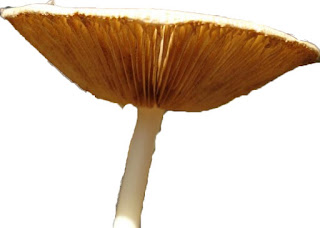
Image found on Wikicommons.
Shriekers are a fascinating creature. They are not dangerous at all. Instead they attract other monsters when they are disturbed. They are a staple of megadungeons. Almost organic traps. Sometimes creatures use them as warning systems. Other use them as a dinner bell.
The shriekers near the Fallow Well are the only living creatures that the wraiths do not touch. The wraiths love the feeling of panic from adventurers and orcs as the shriekers scream.
Some myconids have bred shriekers in several colors. They do this trying to find a harmonic that will summon their demon queen, Zuggtomy. They have succeeded. Red, Red, Green, Blue, Blue and she will appear.
The orcs who now control the Finnius Brewery in Mord Mar have struck a deal with Acidander, the green dragon. Shriekers have been planted in the north alley of the brewery. When the shriekers sound, Acidander comes to their aid. For the grissly price of three warriors. He doesn't eat them, but is instead building his own army.
There is only one passage across the underground river in the Devil's Decision. A sea monster inhabits the waters. It is attracted by the patch of shriekers on the far side. Chances are not everyone will be across when Dark Nessie shows up.
Wednesday, December 6, 2017
Megadungeon resources

Rhinegold and the Valkyries
licensed from Fat Goblin Games
I missed Monster Monday again. The holidays suck for schedules. What can I say. I'll try again next week. In the meantime, here's a few of the books and magazines that I look at when working on my megadungeon, Mord Mar. I am not including the books I listed here (my 5 important GM books.)
The Twisting Stair: I picked up copies of both volumes of this zine at North Texas, and they are both full of good ideas if you are building a megadungeon. They are well worth the price of admission.
Traps & Treachery: I'm not good at traps. It's a fact of my DMing life. I often use this book as a springboard for other ideas. You can find it cheaper than in that link, too. I think I found it for $5 at a FLGS somewhere in my state.
Dungeon Fantastic Megadungeon Design: Peter Dell'Orto has a great series of articles in that link. He also regularly posts dungeon play reports. He has a lot of great resources for free there.
Advice on building a megadungeon: Before the Marmorial Tomb, Benoist Poire wrote an extensive advice column for building a megadungeon on The RPG Site. It is worth the read. And probably taking notes.
Creighton Broadhurst's Dungeon Design: It is a short and sweet article that covers the basic design elements before hitting pen to paper.
Megadungeon search on RPG Now: I haven't read most of these. I looked at Megadungeon #1 today, and wasn't impressed. Too much not-megadungeon stuff. The best part, you can see which megadungeons are available on PDF today! (Those I HAVE read).
What other resources do you guys use that I didn't mention? Let me know in the comments or the S&W G+ page or the Silver Bulette FB page.
Friday, October 6, 2017
Spiders Part 2
Since I missed last week's Monster Monday, I decided to do a part 2 to this week's! Here's some more ways to make your players hate the arachnids.
How about a bridge made of spiderwebs crossing a chasm (lava pool, lake, acid pool)? As the first character gets half way across, a spider lowers itself from the ceiling, telepathically demanding payment. Add more fun by having the spider remove a humanoid's head, and fill the resulting cavity with its thorax.
Do your characters just grab loot like armor and helmets, and just throw them on? Put a poisonous spider in one, and have it bite. They may look a bit closer next time.
Ever seen a zombie spider? Seems more nightmarish than a normal one.
Speaking of undead spiders, I once had an evil wizard put nests of spiders inside of his skeleton army's armor. A rib cage makes a great place to put a tangled spider web.
Matt Finch includes a giant invisible spider in Monstrosities. Invisible webs are a hazard you don't want to run into. To make them more fun, put them in a pit trap.
You know the tale of Sleeping Beauty? What if a spider made its home in her mouth while she was "asleep." That's a kiss that would never be forgotten, I promise.
Tired of your 4 minute adventuring days? Have some spiders infest the trail rations of the party. That should keep them moving.
Spider symbolism is a bit more difficult than encounters. But, there are some things that most groups should be able to understand.
Two spiders have been carved into the ceiling above a door. Both are spinning the same web. In Mord Mar, I may use this to denote a fateful moment. What happens beyond that door weaves part of the fate of the entire mountain.
A statue of a spider, sits in the center of a room. Does it mean that everyone will be trapped inside, as if in a spider's web?
Have a particularly confusing or difficult area to map in your dungeon? Mark the entrance with spider webs. This allows for two things. First, it gives decided boundaries to the difficult area. Secondly, it warns the players that something is going to be sticky, or hard to escape.
Well, that's enough for now. Talk to you all on Monday!
How about a bridge made of spiderwebs crossing a chasm (lava pool, lake, acid pool)? As the first character gets half way across, a spider lowers itself from the ceiling, telepathically demanding payment. Add more fun by having the spider remove a humanoid's head, and fill the resulting cavity with its thorax.
Do your characters just grab loot like armor and helmets, and just throw them on? Put a poisonous spider in one, and have it bite. They may look a bit closer next time.
Ever seen a zombie spider? Seems more nightmarish than a normal one.
Speaking of undead spiders, I once had an evil wizard put nests of spiders inside of his skeleton army's armor. A rib cage makes a great place to put a tangled spider web.
Matt Finch includes a giant invisible spider in Monstrosities. Invisible webs are a hazard you don't want to run into. To make them more fun, put them in a pit trap.
You know the tale of Sleeping Beauty? What if a spider made its home in her mouth while she was "asleep." That's a kiss that would never be forgotten, I promise.
Tired of your 4 minute adventuring days? Have some spiders infest the trail rations of the party. That should keep them moving.
Spider symbolism is a bit more difficult than encounters. But, there are some things that most groups should be able to understand.
Two spiders have been carved into the ceiling above a door. Both are spinning the same web. In Mord Mar, I may use this to denote a fateful moment. What happens beyond that door weaves part of the fate of the entire mountain.
A statue of a spider, sits in the center of a room. Does it mean that everyone will be trapped inside, as if in a spider's web?
Have a particularly confusing or difficult area to map in your dungeon? Mark the entrance with spider webs. This allows for two things. First, it gives decided boundaries to the difficult area. Secondly, it warns the players that something is going to be sticky, or hard to escape.
Well, that's enough for now. Talk to you all on Monday!
Monday, September 18, 2017
Monster Monday - Gibbering Eyes
As I continue to slog through my "haunted house," I am looking deep inside more soul for twisted things. One such creature that has spewed from the depths is the Gibbering Eyes. Take a look for yourself:

© Jack Badashski, 2016
find him on RPGNow
Gibbering Eyes
HD: 4 + 4
AC: 1 (18)
Attacks: Bite (1 hp)
Attacks: Bite (1 hp)
Save: 13
Special: Eye rays, gibbering, spit
Move: 3
CL/XP: 8/800
In addition to using gibbering or spit, the gibbering eyes can use 1d4 eye rays per round:
1. Darkness 15-Foot Radius, as the spell, it targets one person, who gets a save to negate the ability
In addition to using gibbering or spit, the gibbering eyes can use 1d4 eye rays per round:
1. Darkness 15-Foot Radius, as the spell, it targets one person, who gets a save to negate the ability
2. Obscuring Mist, as the spell
3. Telekinesis as the spell
4. Sleep as the spell, except one target, who gets a save
5. Feeblemind as the spell
6. Heat Metal as the spell
7. Hold Person as the cleric spell
8. Lightning Bolt as the spell
All eye rays are cast at 4th level proficiency (so a Lightning Bolt would do 4d6 damage)
Gibbering: All creatures within 60' of the sound of a gibbering eyes must make a save or be confused (per the spell).
Spit: A gibbering eyes can spit up to 30' a glob of acid for 2d6 damage.
The stuff of nightmares.
Monday, September 11, 2017
Monster Monday - Old Crawler!
(From Monstrosities): An "old crawler" is a withered human hand severed at the wrist, black and mummified in appearance.I am still working on my "haunted house" module. And it is still Halloween season, so a creepy monster is mandatory.

http://assets.atlasobscura.com/article_images/7719/image
Old Crawler (Monstrosities pg 361) fits so well into the "haunted house," that I can't help use it. I intend to have them create an ambiance. "The party hears a scratching skitch-skitch-skitch sound." But they never see the crawlers following them in the walls. They are minions of whatever is "The Evil" of the house. They attack stragglers or loners, and retreat before the group arrives. They will ratchet up paranoia throughout the house.
I really like this creature. The remind me of Crawling Claws from 2e, with a bit more punch. Gangrenous rotting? Disgustingly fun. But, I think it can be more than that. . .
How about a mummy version? A hand jumps out of the darkness and contaminates an adventurer with Mummy Rot? Adventurers won't even suspect mummy rot for hours if they aren't in a pyramid.
Maybe there was a forgetful mage that programmed Old Crawlers to show him the way to his lab. These crawlers now show anyone that isn't aggressive the path. Would your players attack on sight and lose the guide? I know mine would.
There was once a lich who removed his own hands. He needed them separate from his body to complete a profane ritual. Adventurers destroyed his body, but not phylactery or crawlers. Now he has the ability to cast spells through his old hands and his new body.
A wight had his hands removed by a very skilled warrior, and died soon after. Now his old crawlers search for living beings to destroy without an intelligence behind them. So far, they have created three new wights, and the number will grow if adventurers can't find the source of the infestation.
Sunday, September 10, 2017
Over 1000!
Silver Bulette had its 1000th download earlier today! Thank you to everyone who has checked out our work so far!
Monday, September 4, 2017
What's Up With Mord Mar pt 2 (GAMEHOLE!!!)
Yesterday, I teased that something cool is happening at Gamehole Con with Mord Mar. I am running a game at 10 am on Friday, in S&WL. GHC has horrible data entry skills, so here's what they actually have as the event description:

I promise that's not what I sent in . . . But, here's the deal with GHC Mord Mar. I have been working on 1-page adventures in and around Mord Mar. We are calling them "Bounty Board Adventures" for now. Several of these will be available to be chosen for the adventure(s) at GHC. I am hoping to have at least four done, and really pushing for five. Which adventure do the players want? I don't know. Go looking for the lost shield of a dwarven clan? Or hunt down a thief? Maybe rescue a lost person? We'll see where they go . . . Here's the "cover" of the first that I have been working on.Welcome to the megadungeon, Mord Mar. This players choose where the adventure goes! Everyone will roll 1st level characters and they will be allowed in other Mord Mar games!

Monster Monday - Flowershroud
In my quest to write a horror module before Halloween, I have been searching high and low for monsters that can instill dread. In S&W Monstrosities, page 173, I found such a thing, the Flowershroud. "A flowershroud is a carpet-like floral growth . . . move slowly from place to place when it is seeking new food . . . carnivorous plants that hunt down their prey." (excerpt by Matt Finch.)
This fits well into my horror theme. Flowershrouds look like any other garden, but can hunt you down. The normal is the strange. I can't wait to utter the words "it's probably just your imagination, but the flowers look closer to you than they were."
I know that I said a Ghost Ship module was my next project. But, I have found the setting too limiting. I haven't exactly decided where the horror/suspense will take place, but I know that it needs to be on land. I will probably do a castle or mansion (how original, right?). The flowershroud will be a great garden or greenhouse surprise. Don't even be shocked if they show up as potted plants in some fair maiden's bedroom.
Looking at their use for a wider campaign, I can see flowershrouds having a symbiotic relationship with a dryad. The dryad wants her tree protected, and has planted a flowershroud to make sure that nothing gets too close.
Imagine an ancient flowershroud that has a giant bee hive embedded in it. The flowershroud roams the land, carrying the bees to new pollens, and in return the bees help slow down prey for the flowershroud.
Another option to pair the flowershroud is with an undead. A particularly deranged necromancer may have planted a flowershroud on the back of a giant crab exoskeleton. He entwines the dark energies of necromancy with the strange nature of the flowershroud, making them a singular force. These hybrids are what guard the entrance to his home.
I'm expecting the follow-up to What's Up With Mord Mar to come today as well. Stay tuned!
This fits well into my horror theme. Flowershrouds look like any other garden, but can hunt you down. The normal is the strange. I can't wait to utter the words "it's probably just your imagination, but the flowers look closer to you than they were."
I know that I said a Ghost Ship module was my next project. But, I have found the setting too limiting. I haven't exactly decided where the horror/suspense will take place, but I know that it needs to be on land. I will probably do a castle or mansion (how original, right?). The flowershroud will be a great garden or greenhouse surprise. Don't even be shocked if they show up as potted plants in some fair maiden's bedroom.
Looking at their use for a wider campaign, I can see flowershrouds having a symbiotic relationship with a dryad. The dryad wants her tree protected, and has planted a flowershroud to make sure that nothing gets too close.
Imagine an ancient flowershroud that has a giant bee hive embedded in it. The flowershroud roams the land, carrying the bees to new pollens, and in return the bees help slow down prey for the flowershroud.
Another option to pair the flowershroud is with an undead. A particularly deranged necromancer may have planted a flowershroud on the back of a giant crab exoskeleton. He entwines the dark energies of necromancy with the strange nature of the flowershroud, making them a singular force. These hybrids are what guard the entrance to his home.
I'm expecting the follow-up to What's Up With Mord Mar to come today as well. Stay tuned!
Monday, June 19, 2017
Lizard-men of Mord Mar (Monster Monday)
The lizard-men of the Swamp are a prehistoric hangover. They were the first humanoid race in the world, but not even they realize this fact. The lizard-men use an oral tradition to tell and re-tell their histories, and have never developed a written language. They are not dumb, however. Occasionally, a member of the tribe has been known to learn Common, in both oral and written form.

The lizard-men are a very spiritual people, but they worship what mankind terms "Forbidden Gods." All known lizard-man gods are evil, and most demand blood sacrifices. These differ by the tribe's oral histories. Some sacrifices are simply "shaggy beasts," and other tribal interpretations require blood from "tusked men." Some are not at all specific, only requiring that the sacrifice is breathing. Over time, almost all human and demi-human sacrifice has been removed from lizard-man culture. Men and their ilk are simply too powerful to raid. However, a group of men stumbling into their territory is a great sacrifice.
A small sect of lizard-men worship Nobback as a god made flesh, and will sometimes attempt to lure creatures to the large alligator. The sect is all males, who keep this godling hidden from the matriarchy.
Lizard-men society is matriarchal. The males are known to be hunter-gatherers while the females tend to societal issues. These include: Oral histories, incubation of eggs, rearing young, making ceremonial instruments (headdresses, sacrificial daggers, altars, jewelry of station, etc) and making or upholding laws. Shamans are almost exclusively female.
Lizard-men near Mord Mar are blood enemies with goblins and kobolds. The dwarves of Stonemire trade swamp cow meat for dyes from the lizard-men. Occasionally, lizard-men will trade with caravans traversing through the swamps.
In the Sanctuary of Water is a separate tribe of lizard-men, that dwell exclusively underground. Their secrets will be revealed on another day.
Lizardmen (from Swords & Wizardry)
Hit Dice: 2+1
Armor Class: 5 [14]
Attacks: 2 claws (1d3), 1 bite (1d8)
Save: 16
Special: Underwater
Move: 6/12 (swimming)
Alignment: Usually Chaos
Challenge Level/XP: 2/30
Image found on Pintrest

A small sect of lizard-men worship Nobback as a god made flesh, and will sometimes attempt to lure creatures to the large alligator. The sect is all males, who keep this godling hidden from the matriarchy.
Lizard-men society is matriarchal. The males are known to be hunter-gatherers while the females tend to societal issues. These include: Oral histories, incubation of eggs, rearing young, making ceremonial instruments (headdresses, sacrificial daggers, altars, jewelry of station, etc) and making or upholding laws. Shamans are almost exclusively female.
Lizard-men near Mord Mar are blood enemies with goblins and kobolds. The dwarves of Stonemire trade swamp cow meat for dyes from the lizard-men. Occasionally, lizard-men will trade with caravans traversing through the swamps.
In the Sanctuary of Water is a separate tribe of lizard-men, that dwell exclusively underground. Their secrets will be revealed on another day.
Monday, June 5, 2017
Monster Monday: MONSTER!!!
This past weekend, I was fortunate enough to travel to NTRPG Con. I was even more fortunate to have the ability to hang out with the Frog God games crew. Bill Webb was the one who originally inspired this regular feature on this blog, and he reminded me of it this past weekend.
A paraphrase from Bill: "When I use the word monster, that's what I mean. It is something dangerous, and not easy to defeat or destroy. They are a threat that common people cannot handle."
And that's the topic today: "Monster." Here's the first definition from Dictionary.com: "a legendary animal combining features of animal and human form or having the forms of various animals in combination, as a centaur, griffin, or sphinx."
This definition only scratches the surface of what we, as gamers, mean for "monster." For example, a living statue would be a monster, but not meet that definition. We need a better definition than the standard one.
I would also humbly add to the definition of monster. A monster is something that instills a fear within people that face it.
So what is a "monster?" We'll start with Bill's definition and work forward:
The rest of the story: after it was not turned, panic set in. Those of us with high level characters refused to get in the water with it. And we never destroyed it. We found a way to immobilize it, but I'm not saying how in case you ever play in one of Bill's games.
Does this monster meet the requirements? It was definitely dangerous, difficult to destroy, and threatening. It was undead (combining features of people and the dead.) And it instilled a fear into the highest level party members: a 9th level thief, an 8th level cleric, 5th level fighters and thief, and even a 4th level paladin (or at least his player.)
Although I know the name of this monster (thanks to being friends with the DM), it's not important. We defeated (but not destroyed) a MONSTER in Mythrus Tower's wilderness environs!
A paraphrase from Bill: "When I use the word monster, that's what I mean. It is something dangerous, and not easy to defeat or destroy. They are a threat that common people cannot handle."
And that's the topic today: "Monster." Here's the first definition from Dictionary.com: "a legendary animal combining features of animal and human form or having the forms of various animals in combination, as a centaur, griffin, or sphinx."
This definition only scratches the surface of what we, as gamers, mean for "monster." For example, a living statue would be a monster, but not meet that definition. We need a better definition than the standard one.
I would also humbly add to the definition of monster. A monster is something that instills a fear within people that face it.
So what is a "monster?" We'll start with Bill's definition and work forward:
- dangerous, difficult to destroy, threatening to most
- legendary animal (or person), with combinations of features
- instills a fear into people that see or face it.
- individually, no, goblins do not meet this criteria. However, as a society of chaos, they absolutely could threaten a village, be difficult to destroy and have enough weapons to be dangerous.
- subjectively speaking, goblins could meet this criteria, based on description (elfish ears, a smashed, pug-like face)
- adventurers nearly never fear goblins, but they could be crushed by the weight of a tribe and see true fear.
The rest of the story: after it was not turned, panic set in. Those of us with high level characters refused to get in the water with it. And we never destroyed it. We found a way to immobilize it, but I'm not saying how in case you ever play in one of Bill's games.
Does this monster meet the requirements? It was definitely dangerous, difficult to destroy, and threatening. It was undead (combining features of people and the dead.) And it instilled a fear into the highest level party members: a 9th level thief, an 8th level cleric, 5th level fighters and thief, and even a 4th level paladin (or at least his player.)
Although I know the name of this monster (thanks to being friends with the DM), it's not important. We defeated (but not destroyed) a MONSTER in Mythrus Tower's wilderness environs!
Monday, May 1, 2017
May Monster Monday
Well, it's Monday morning here again. Time for my soon-to-be weekly blog about monsters! Last week, I looked at monster books that I love. This week, I'm giving the community a sneak peak at some Mord Mar stuff! These monsters were originally made for Pathfinder, but as we use Swords & Wizardry now, they have been translated.
FLAMESPIT LIZARD
Hit Dice: 5
Armor Class: 2 [17]
Attacks: 2 Claw (1d4), Bite 1d8 + 1d6 (fire)
Save: 12
Special: Napalm Spit
Move: 18
Alignment: Neutral
Number Encountered: 1d6
Challenge/XP: 7/700
Flamespit lizards are passive creatures, unless they sense their primary food: oil. When flamespit lizards sense oil with 60' they will investigate, curiously and non-aggressively. They will paw and bite at any container that has oil in it. If any creature attempts to move the oil away from a flamespit lizard, they immediately attack with their napalm spit.
Napalm spit: Flamespit lizards can use this attack twice per day. They shake their head back and forth before expelling a sticky glob of flaming ichor at their target. If it hits, the target takes 3d6 damage the 1st round, unless wearing armor. If the target is wearing armor, it must save or be destroyed by the acidic fire. On the second round, the target takes 2d6 damage (regardless of the previous round's results) and if the armor was not destroyed, it must save again. On the third round, the target takes 1d6 damage, but the armor is no longer in danger.
The Hot Spring
While exploring a cave, the party comes across a warm spring. Lazing about the spring are 4 lizards, all about 6 feet long. The lizards' bright crimson and green scales reflect the torch and lantern light as polished stones. As the group's porter enters the spring cavern, the lizards lift their snouts into the air, and begin walking lazily toward the hireling carrying the lamp and oil. . .
The Flamespit Lizard was originally created by Dustin Edwards for use in a Mord Mar scenario. They will be appearing in the upcoming Mord Mar book entitled Stonemire.
Orc-wraith
Hit Dice: 5
Armor Class: 2 [17]
Attacks: 1 claw (1d6 damage + 1d6 wisdom drain)
Save: 12
Special: Rage Aura 30' (Save or attack nearest creature), Create Spawn, immune to non-magical or non-silver weapons
Move: 9/24 (flying)
Alignment: Chaotic
Number Encountered: 1d4
Challenge/XP; 8/800
Orc-wraiths are a terrible, rare undead creature. They only form when one of two things happen: An orcwraith kills a person with orcish blood, or when a wraith kills a person of orcish blood and dies before the orc's wraith-form can rise. Orc-wraiths hate all life, and will attack until the life-force is destroyed, or the orc-wraith is.
Whenever an orc-wraith hits an opponent, their willpower lessens. They begin to give over to baser instincts and lose the ability to reason (-1d6 wisdom with each hit). Any who lose all their reasoning and willpower die. This willpower can only be regained through magical means.
Orc-wraiths rage is infectious. Their hatred of life is so great, that all who near one must make a save, or attack the nearest living creature for 1d6 rounds. All orcs or half-orcs that die at the hands of an orc-wraith will rise as one upon the next full moon. Orc-wraiths ignore all attacks from non-magical and non-silver weapons.
The Dead Room
The lord of the land has tasked the adventurers to find the Wand of Archian. Archian was entombed in a low hill, about 2 days walk from the nearest village. When the group arrives, they find that a group of orcs had broken down the door, and fought a horror inside. Although there is no sign of the original horror, the three desiccated orc bodies prove there was a struggle. The grim shadow visage of one of these orcs floats through a wall, and all hell breaks loose. The lead fighter turns to strike the cleric, and the thief yells "run." This warning may have come too late.
The Orc-wraith was devised by me (Jayson "Rocky" Gardner) for use in Mord Mar. I expect them to show up in a module sometime in the future. But, the Cultworks is still a long way off.
FLAMESPIT LIZARD
Hit Dice: 5
Armor Class: 2 [17]
Attacks: 2 Claw (1d4), Bite 1d8 + 1d6 (fire)
Save: 12
Special: Napalm Spit
Move: 18
Alignment: Neutral
Number Encountered: 1d6
Challenge/XP: 7/700
Flamespit lizards are passive creatures, unless they sense their primary food: oil. When flamespit lizards sense oil with 60' they will investigate, curiously and non-aggressively. They will paw and bite at any container that has oil in it. If any creature attempts to move the oil away from a flamespit lizard, they immediately attack with their napalm spit.
Napalm spit: Flamespit lizards can use this attack twice per day. They shake their head back and forth before expelling a sticky glob of flaming ichor at their target. If it hits, the target takes 3d6 damage the 1st round, unless wearing armor. If the target is wearing armor, it must save or be destroyed by the acidic fire. On the second round, the target takes 2d6 damage (regardless of the previous round's results) and if the armor was not destroyed, it must save again. On the third round, the target takes 1d6 damage, but the armor is no longer in danger.
The Hot Spring
While exploring a cave, the party comes across a warm spring. Lazing about the spring are 4 lizards, all about 6 feet long. The lizards' bright crimson and green scales reflect the torch and lantern light as polished stones. As the group's porter enters the spring cavern, the lizards lift their snouts into the air, and begin walking lazily toward the hireling carrying the lamp and oil. . .
The Flamespit Lizard was originally created by Dustin Edwards for use in a Mord Mar scenario. They will be appearing in the upcoming Mord Mar book entitled Stonemire.
Orc-wraith
Hit Dice: 5
Armor Class: 2 [17]
Attacks: 1 claw (1d6 damage + 1d6 wisdom drain)
Save: 12
Special: Rage Aura 30' (Save or attack nearest creature), Create Spawn, immune to non-magical or non-silver weapons
Move: 9/24 (flying)
Alignment: Chaotic
Number Encountered: 1d4
Challenge/XP; 8/800
Orc-wraiths are a terrible, rare undead creature. They only form when one of two things happen: An orcwraith kills a person with orcish blood, or when a wraith kills a person of orcish blood and dies before the orc's wraith-form can rise. Orc-wraiths hate all life, and will attack until the life-force is destroyed, or the orc-wraith is.
Whenever an orc-wraith hits an opponent, their willpower lessens. They begin to give over to baser instincts and lose the ability to reason (-1d6 wisdom with each hit). Any who lose all their reasoning and willpower die. This willpower can only be regained through magical means.
Orc-wraiths rage is infectious. Their hatred of life is so great, that all who near one must make a save, or attack the nearest living creature for 1d6 rounds. All orcs or half-orcs that die at the hands of an orc-wraith will rise as one upon the next full moon. Orc-wraiths ignore all attacks from non-magical and non-silver weapons.
The Dead Room
The lord of the land has tasked the adventurers to find the Wand of Archian. Archian was entombed in a low hill, about 2 days walk from the nearest village. When the group arrives, they find that a group of orcs had broken down the door, and fought a horror inside. Although there is no sign of the original horror, the three desiccated orc bodies prove there was a struggle. The grim shadow visage of one of these orcs floats through a wall, and all hell breaks loose. The lead fighter turns to strike the cleric, and the thief yells "run." This warning may have come too late.
The Orc-wraith was devised by me (Jayson "Rocky" Gardner) for use in Mord Mar. I expect them to show up in a module sometime in the future. But, the Cultworks is still a long way off.
Subscribe to:
Posts (Atom)